Uncle Lee’s Bronze Star

A few years ago, I had heard there was a trunk or box that contained some of Grandpa Pete’s possessions in the possession of my cousin Ernie. It took me a year or more to connect with Ernie, who told me he had the trunk but there was nothing in it. He didn’t know what had happened to its contents, which he said once included “Uncle Lee’s Bronze Star.” That information sent me on a journey to find out more about my great uncle.

Leopold Anthony Spry was born April 4, 1916 to Peter and Adelaide Spry on their farm north of present-day Callaway (see blog post “Prosperity and Hard Times in Callaway”). Lee likely grew up doing farm chores with his siblings. The 1940 census shows Lee at age 24 still at home and working as a farm laborer, probably for neighbors as his parents no longer had the farm. He registered for the draft on 16 October of that year, along with his brothers Ray, Bud (Leonard) and Bunt (Ervin) in Callaway. Interestingly, brothers Elmer and Ernie also registered that day at Grand Portage in Cook County. It seems the brothers were united in doing their patriotic duty. Of these, Lee, Elmer and Bunt all served in World War II.
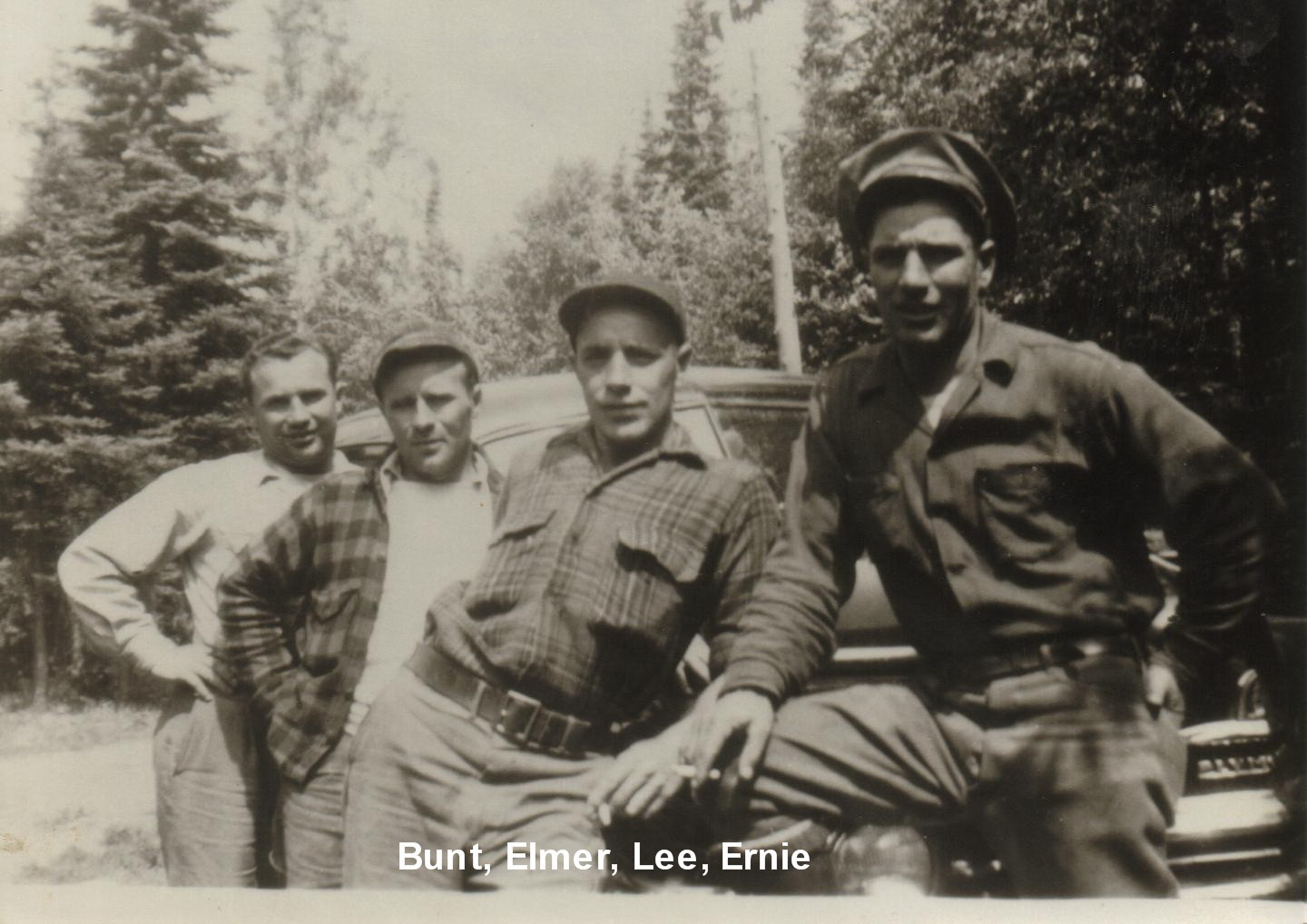
This photo was likely taken shortly after WWII.

I tried to retrieve Lee’s military records from the National Archives but learned that most WWII Army personnel records were destroyed in a fire in 1973. All they sent me was his final pay stub. I didn’t have much hope of learning more about Lee’s military service. Then one day last summer I came across a Facebook post about Twisted Twigs Genealogy, who specialize in tracking down records for military units at the National Archives. I sent in a request to have them search for Lee’s records and waited.

Earlier this year, I was notified that Twisted Twigs had completed their search and that I would be receiving an electronic copy of a 227-page “OMPF Mini Reconstruction File.” It took a few email exchanges but I had finally gotten what I was looking for.

The records do not indicate where or when Lee received basic training. In October 1942 Pvt. Lee Spry was transferred to the 23rd General Hospital at Ft. Meade in Maryland. The bulk of the 227 pages were monthly company reports containing head counts and notes about various enlisted men reporting for duty on each day. Also included were “Ration Accounts” that listed men who were authorized to mess separately. Pvt. Spry showed up on these lists from time to time. Apparently, these were personnel who received a cash allowance for subsistence away from their base during training and other assignments. Pretty mundane stuff.

The Reconstruction File included a history of the 23rd General Hospital, which shipped out to Africa in late July 1943. They arrived in Casablanca, Morocco in August and spent that summer and fall hopscotching across North Africa by train finally to Oran, Algeria where they prepared to be deployed to Italy. On 28 October the unit landed on the beach outside Naples because the harbor was strewn with wreckage. The beach was mined by the Germans and several people were injured and one killed crossing the beach. They marched to a large fair grounds and set up a hospital among some bombed-out buildings. The 23rd General Hospital received its first combat-wounded patients on 17 November 1943. The hospital served over 11,000 patients over the next six months. It’s not clear what Pvt. Spry’s duties were; perhaps he served as an orderly in the hospital.

On 30 May, 1944, Pvt. Spry was assigned to Company A of the 310th Medical Battalion, which was preparing to support the 337th Infantry Combat Team of the 85th Infantry Division. The 310th was responsible for evacuating wounded soldiers from the battlefield and providing initial medical care. Pvt. Spry was assigned to be a litter bearer. On 5 June, the infantry and the litter bearers marched through Rome to the cheers of its residents.

On 13 September US and British troops began their assault on the Gothic Line, which was a fortified line of defense built by the Germans across the mountains of central Italy. The Gothic line included over 2,000 machine-gun nests, over 400 artillery positions and 130,000 yards of barbed wire. The 337th, supported by the 310th, was assigned to take Mt. Pratone, located northeast of Florence.

The following is an excerpt from “Highlights of Company A, 310th Medical Battalion”, a report included in the online history of the 337th Infantry Regiment:

…Casualties were heavy and conditions for evacuation unbelievably difficult. Our litter bearers at times carried patients for as many as six to eight miles over almost impassible mountain trails, across narrow paths gouged out of sheer cliffs…Many times one false step meant death.

The experience of T/5 Sol Glik and his squad of three consisting of Pvt. John Schaffer, Pfc. Thomas Shipp and Pvt. Leopold Spry is an indication of the heroism and physical strain demanded of the men in effecting hand evacuation. Sol and his squad volunteered to accompany an assault unit in an early morning attack. While yet a considerable distance from their objective the unit was fired upon and split into two sections by Jerry (Germans) who was dug in on the side of a nearby dominating hill…Both infantry and medics alike were pinned to the ground. Word of a casualty eventually reached the squad and the men were forced to abandon whatever cover they had to find the casualty, gave what aid they could, and prepared to carry him back to the aid station by a round-about route…This return route involved the crossing of two mountain peaks. It was only with superhuman effort that the squad finally completed the unfamiliar, eight miles evacuation over terrain hazardous in itself, not to mention the difficulties imposed by intermittent enemy artillery and mortar barrages. It was for this achievement that Sol Glick and his squad were awarded Bronze Star medals.

The official record of Bronze Star awards was included in the Reconstruction File. It reads as follows:

LEOPOLD A. SPRY, (37292274), Private, Medical Department, Company “A”, 310th Medical Battalion, United States Army. For heroic achievement in action on 17 September 1944, in Italy. Entered military service from Callaway, Minnesota.

Pvt. Spry continued to serve with the 310th Medical Battalion in Italy through the end of the war and was discharged on 27 October 1945.

Unfortunately, I have little other information about Uncle Lee’s life after the war. According to the 1950 US Census, he was living in White Earth with a woman named Cynthia listed as his wife. This would be Cynthia Leecy, the daughter of John Leecy who had a store in White Earth. I have not found a marriage record for Lee and Cynthia. The census has Lee working as a farm hand.

On 23 May 1958, Lee Spry took his own life in a house in Callaway. According to my dad, Grandpa Bud had to clean up the blood and gore. Dad doesn’t remember much about Uncle Lee, other than he drank a lot. These days we are all familiar with PTSD among veterans. Although we’ll never know, it’s possible that Uncle Lee was haunted by what he saw during the war.

Uncle Lee’s grave is located at St. Mary’s Cemetery in Callaway. When my parents had responsibility for maintaining the cemetery, Dad said he always made sure there were flowers at Uncle Lee’s grave. Other veterans in the cemetery have an official veteran’s headstone or plaque that lists their rank, period of service and branch of the military.  Uncle Lee’s grave marker is just a simple stone. There is a stake with a star indicating he was a veteran. Perhaps the family didn’t know that Lee qualified for a military headstone.

It’s more likely they were following the teachings of the Catholic Church at the time, which considered suicide a mortal sin. That is why Uncle Lee was buried back in a far corner of the cemetery. Thankfully, the Church has modernized its views and recognizes that suicide is often due to mental illness. By sharing his story, I’m hoping my family will change their views on Lee and recognize his illness.

I would really like to see Lee’s grave marked with a military headstone, but I don’t know if that’s possible.
Return to Mooningwanekaaning

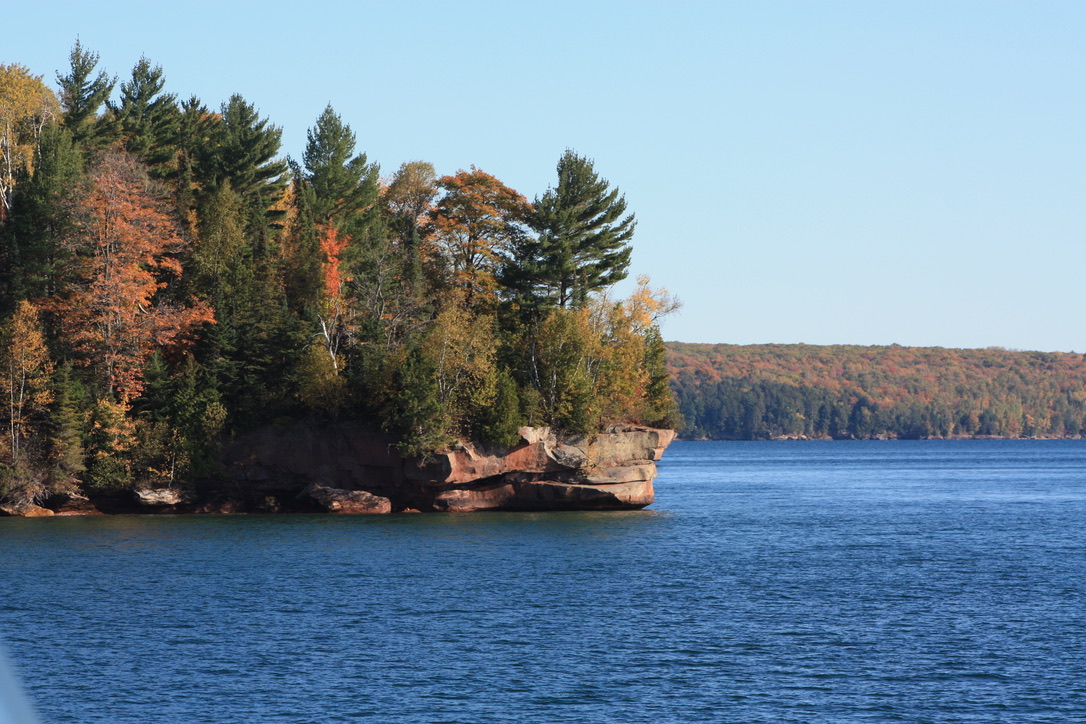
Last October, my wife and I decided to make trip back to Madeline Island to celebrate our anniversary. We had been there several years ago and really enjoyed our time there. I also wanted to go back because the Madeline Island Museum was closed last time and I wanted to see if they had any information about my ancestors.

We stayed in Bayfield and took the ferry out to LaPointe. The museum was open this time. I told a staffer at the front desk that my great-great-great grandparents were married there. She offered to make photocopies of pages from the marriage register, which had been compiled and typed from the original register. I got a copy of the page listing the marriage of Pierre Trotochaud to Angelique Masset (or Massey) by Father Baraga in 1843. Interestingly, Angelique was listed by her mother’s maiden name and not Blair.

While touring the museum, I stopped to talk with an elder from the nearby Red Cliff Reservation named Rob who worked there. I told Rob about the marriage record. He said the names sounded familiar to him. Then he showed me a photo of a book on his phone, “All Our Relations”. Rob suggested I check it out to see if I could learn more about my family.

Rob went on to tell me about the importance of the island (called Mooningwanekaaning in Ojibwe, referring to home of the yellow-shafted flicker) to the Ojibwe. He told me that many of the people who migrated from the island to Sandy Lake, where Angelique was from, were of the Loon Clan. Rob explained that, although the Ojibwe had dispersed from Mooningwanekaaning to reservations established by the treaties, they still considered the island their spiritual home. Rob pointed out that many of Catholic Indians continued to return to the island to have their children baptized and to be married. He mentioned two children buried at the Catholic church who perished at Sandy Lake and their parents buried them at LaPointe. (These were Clem Beaulieu’s two daughters who died in 1845.) I enjoyed my visit with Rob and told him I hoped to see him again.

When I got home I immediately reserved a copy of “All Our Relations” from the local library. Rob was right: the book had information about our family. The book includes records of interviews conducted at LaPointe after the Treaty of 1837. The government was trying to determine who was eligible for a payment to mixed bloods that was provided for in the treaty.

One of the interviewees was Margaret Bles (Blai or Blais), who was born at Pine River in Iowa Territory, which at that time included most of what is now Minnesota. She had resided at Sandy Lake “until within the last 2 months.” The entry went on to say that she married a man named Alexis Bles “13 or 14 years since”, which would be about 1825. The marriage produced 5 children: Angelique, 11 yrs old; Antoine 10; Joseph 8; Edouard 6; and Alexander 4. Antoine had been born at Mille Lacs and Joseph at Leech Lake; the other three children were born at or near Sandy Lake. This record matches the names and approximate ages of the Blairs in our family tree. The record also mentions that Alexis had died “4 years since.” This would be about 1835.

The book also includes information about a man named Alexis Blais who appeared before the Indian agent in 1828. He was one of three men who were ordered out of Indian country the previous year because they did not have licenses to trade in Indian country. The men were summoned to Sault Ste. Marie by the agent, none other than Henry Rowe Schoolcraft, the “discoverer” of the Mississippi headwaters. The episode is documented in Schoolcraft’s “Personal Memoirs”, which includes parts of his daily journals. Schoolcraft wrote that Alexis “pleaded ignorance” to the laws pertaining to traders and Indian country. Schoolcraft’s journal implies that Alexis was the subject of a complaint by “Mr. Aikin” at Sandy Lake. That would be William Aitkin, the trader who ran the American Fur Company post there. During the interview, Alexis guessed that he would not have gotten in trouble if he had worked for Aitkin instead of independently. According to Schoolcraft, Alexis “did not desire to return to the Indian country”.

If Alexis Blais did leave the area in 1828, he would not have fathered Margaret’s younger children. In her interview at LaPointe Margaret claimed he died around 1835, which suggests he did not leave after meeting with Schoolcraft but returned to his family.

This experience has finally cleared up the mystery of who Alexis Blais (Alexander Blair) was and gives me a better picture of what life was like for Margaret and her children. It appears they moved wherever Alexis could make a living, with stops at Leech Lake and Mille Lacs. It is fascinating to to know that our ancestors interacted with historic figures like Schoolcraft, Baraga and Aitkin.

Mooningwanekaaning was important to the family; Margaret and her children were baptized there by Father Baraga later in 1839 (documented in “All Our Relations”). Now the island holds a special place in my heart, too.

Prosperity and Hard Times in Callaway

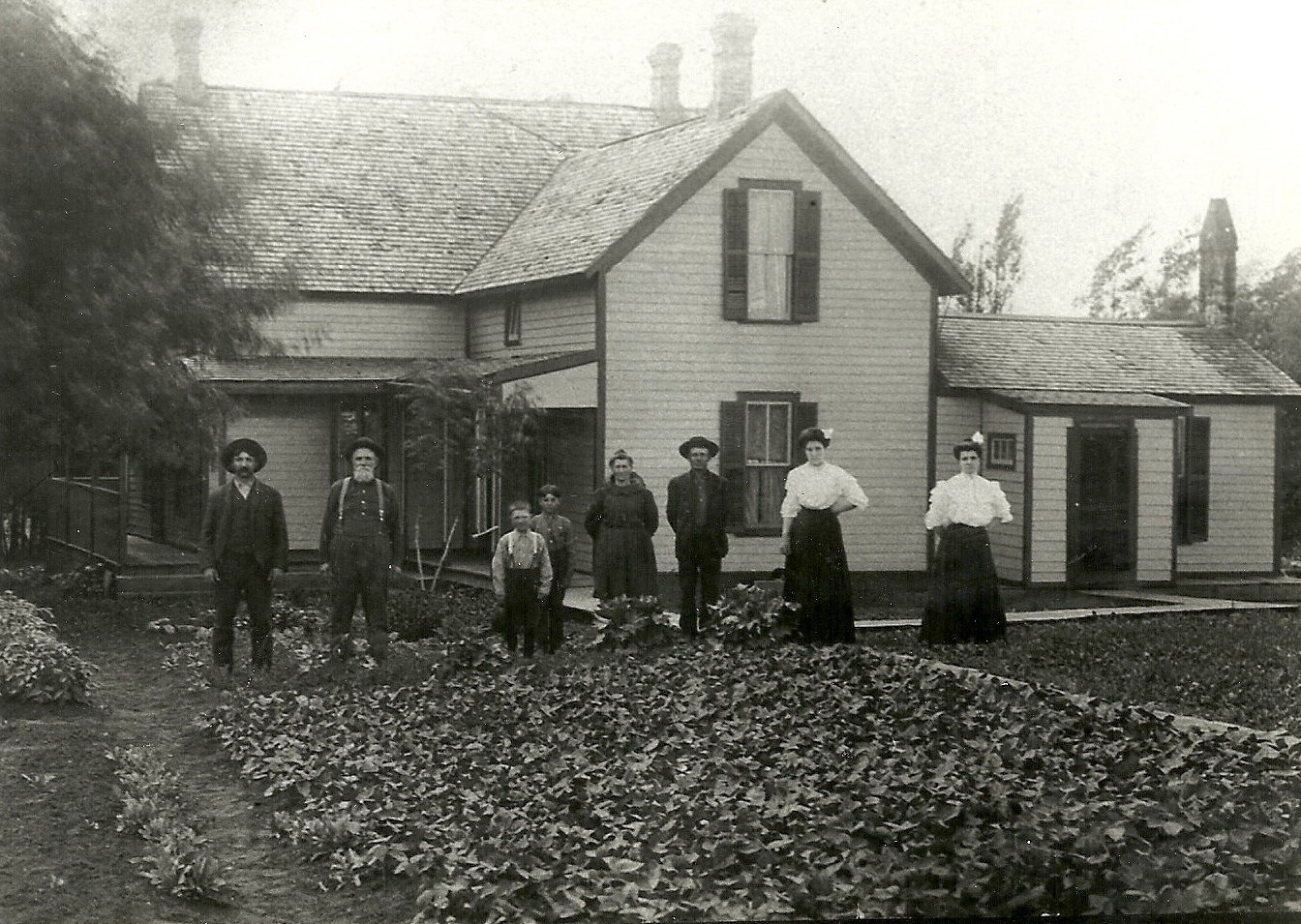
I have been studying this photo for quite awhile because I think it tells a story.

Spry family home

The photo appears to have been made around 1900. Mitchell and Amelia had been working their farm for about 25 years. In that time, they had managed to build a relatively large, well-appointed home complete with window shutters and landscaping.

The way his family is posed in front of his house suggests that Mitchell wanted to show the world he was prospering. He had come along way from his poor beginnings in Quebec. His family looks healthy and well-clothed. This was no snapshot; the photographer composed the photo carefully. The message is clear: this family is successful.

We do not know much more about Mitchell and Amelia’s life. We know that Mitchell and Amelia served on committees organizing the White Earth Celebration back in 1888, according to the The Progress, White Earth’s newspaper. We know Mitchell was one of five men who signed (Mitchell with an X) for a 90-day note for $700 for construction of the Catholic church in Callaway in 1909 (from Assumption Catholic Church’s centennial booklet).

One other source of information on the family is the Becker County Recorder’s office. These records indicate Mitchell and Amelia mortgaged the farm in 1907 and satisfied that debt in 1908. The deed records include several entries indicating the Sprys, including sons Henry and Peter, may have been speculating on lots in the newly platted town of Callaway. Callaway sprung up on a former Indian allotment along the Soo Line railroad, about 3 miles from the Spry farm. Henry and his brother-in-law Eusebe obtained a “town lot deed” in 1908 from Tri-State Land Co. for a lot in Callaway; this may have been where they established their store.

The deed records indicate Pete and his wife Addie sold Pete’s original 80-acre allotment along the Buffalo River to Annie Reinhardt, wife of Henry who owned the flour mill in Richwood. Presumably, Pete then farmed with Mitchell and his brothers for a time. In 1917, Pete and Addie bought Mitchell and Amelia’s farm with $1500 in financing from his parents and another $500 borrowed from his brother Henry. Pete and Addie raised their ten kids on this farm.

That same year, the U.S. entered World War I. Farm prices grew stronger during the war, as demand increased to feed war-torn Europe and the hungry soldiers overseas. Wheat prices increased from $1.03 per bushel in 1914 to $2.34 in 1919, according to the Minnesota Historical Society. Land prices also doubled in value, and farmers found it relatively easy to obtaining financing to expand their operations.

In 1920, Pete and Addie obtained a $4000 mortgage from Security State Bank in Detroit Lakes and a $300 second mortgage from Citizens State Bank in Callaway. They used these funds to pay off their debts to Pete’s parents and brother.

After the war ended and as European countries began to recover, crop surpluses began to build. Burdened with debt, farmers were reluctant to reduce production and crop prices began to drop. By 1920, wheat was down to $1.65 per bushel. With reduced demand, land prices also declined. Soon, farmers were unable to make their mortgage payments. Between 1926 and 1932, foreclosures took 1,442 farms in Minnesota. The farm crisis also precipitated bank failures, including Security State Bank and Citizens State Bank.

In 1924, Pete and Addie obtained a $6000 mortgage from the State of Minnesota. This mortgage may have been issued by the Department of Rural Credit, formed by the state in response to bank failures. The couple apparently used this financing to satisfy the previous mortgages, which were then held by Northwestern Trust Company.

In 1927, the State of Minnesota foreclosed on Pete and Addie. A sheriff’s sale was held on June 11, 1927. It does not appear that there were any successful bidders, as the 1929 county atlas still listed the State of Minnesota as the owner of the farm and the 1930 census indicated they were renting the farm. The home Mitchell and Amelia built and were so proud of was still home for Pete and Addy, but it was not theirs anymore.

Another photo of the Mitchell Spry family, taken around 1920, tells another story.

Mitchell Spry Family

Back: Eliza Spry Bellefeuille, Amelia Spry Bellefeuille, Lawrence Spry, Madeline Spry Trepp, Ellen Spry Bowman. Front: Henry Spry, Mitchell Spry, Amelia Trotochaud Spry, Frank Spry. Missing: Peter Spry

Here the adult children surround Mitchell and Amelia, perhaps on the occasion of their 50th wedding anniversary. Again, this portrait depicts a prosperous family. But Peter is not in the portrait. According to family lore, he was too busy working in the fields to sit in on the photo. This story suggests that Pete did not lose the farm for lack of effort.

The 1940 census indicates Pete and Addie had moved into Callaway sometime after 1935. Pete served as city treasurer and also served on the school board. Oldest son Ray, his wife Abby and their kids Russell and Donna were staying with Pete and Addie in 1940. The youngest boys, Lee and Bunt, were still living at home. Soon they would be off serving in World War II. Elmer would serve, too.

The 1940 census has Uncles Ernie and Elmer living in Grand Portage. Uncle Ernie joined the Civilian Conservation Corps and helped build the replica trading post at Grand Portage. A historian researching the CCC in Minnesota interviewed Ernie in 1982 about growing up during the Depression. He recalled the whole family out picking potatoes in farmers’ fields for $3 a day.

Pete and Addie’s oldest daughter Ethelbert had married Lauren Brandvig of Nebraska and was living in Minneapolis and working at Woolworth’s (1937). Doris had married Joe Zurn; Joe was a truck driver who owned his own truck in 1940. Rena was married to Dan Clark, who was working for the Works Progress Administration (WPA), which was building roads and public buildings. Lenora was married to Lyle Bryngelson, who worked for Cass-Clay Creamery; they were living in Moorhead in 1936. Lenora’s twin, Leonard “Bud” Spry was my grandpa. In 1940, he and wife Irene (Diz) and my dad Jerry lived in Callaway and Bud worked at Paul Johnson’s bee farm.

Spry sisters

Rena, Doris, Ethelbert and Lenora Spry, daughters of Pete and Addie

L to R_ Ervin, Elmer, LeeDespite a disastrous farm economy and the Great Depression, Pete and Addie managed to raise their kids and send them off into the world to start their own families. Pete lost Addie in 1944 at the age of 65. Pete lived the rest of his life in Callaway in a house on the south side of town. He passed away in 1971, at the age of 88.
********

In 1982, I came home to Callaway on Spring Break and helped my dad tear down Great-Grandpa Pete’s house to make room for a new house to be built by cousin Ernie Clark. I remember working alone in the old house, knocking out plaster walls and taking out studs that Dad would recycle for other projects. I remember finding a report card in one wall; it was Henry’s from his time at Carlisle Indian School. I gave it to Aunt Rena for safekeeping. As I worked, I wondered about Grandpa Pete. I couldn’t say I really knew him; I was 10 when he passed away.

As I said in an earlier post, the Sprys did not have a lot of stories about their ancestors. Researching my family history has filled in some holes in our story. Although I did not find a lot of details, I was able to align the facts I could find with events in the history of White Earth and of Minnesota. This gave me a better idea of what our ancestors experienced. Hopefully, our family now has a better sense of where we come from.

What I Learned at the National Archives, Chicago

IMG_0043

The “Bean” at Millenium Park, Chicago

There was still snow on the ground and ice on the lake in the last week of April when I traveled to Chicago to do some research for my book project. Although I had planned the trip to gather information for that project, I knew it would also be an opportunity to research our family’s history further. The Chicago unit of the National Archives holds records for the midwestern U.S., including Bureau of Indian Affairs records for White Earth and other reservations.

I spent an entire day at the Archives, and was able to access official correspondence to the Indian agent at White Earth as far back as the 1870s. I found the official record showing that Amelia Trotochaud Spry had “proved up” her land on the reservation prior to the allotment era. This process was spelled out in the 1867 treaty, whereby tribal members could claim 40 acres by breaking ground on 10 acres. Up to 160 acres could be claimed this way.  The record book had a total of 71 entries; Amelia’s 160-acre claim was 15th in the list, with the date of August 18, 1878. The location has the same legal description as the allotment she received under the Nelson Act of 1889. (In Amelia’s case the allotment was a formality.)

The Archives have the original receipt book kept by the Indian agent to record annuity goods handed out to tribal members. I found an entry dated August 8, 1874 for receipt of 11 lbs. of pork, 49 lbs. of flour and 10 lbs. of sugar issued to Angelique Blair (Mrs. Pierre Trotochaud). A week later, another entry had 4.5 lbs. of pork and 24.5 lbs. of flour being issued to Mitchell Spry. As these were the only entries in the book for members of our family, it suggests they needed some initial supplies when they got to White Earth. This means the Trotochauds and Sprys at White Earth in late July or early August of 1874. Amelia was about 5 months pregnant with Liza; Frank was 3 years old and Henry about 18 months.

The Archives also hold the original annuity rolls, which were used to record membership in the tribe. The members are listed under their respective chiefs; The Trotochauds and Sprys are listed under “O-muck-kuck-keence”. Interestingly, John Johnson Sr. is listed under the same chief. This could be Enmegabowh, the famous Episcopalian missionary. If so, it begs the question what if any relationship our family may have had with him.

The annuity rolls list all of the eligible children of each tribal member. These records appear to be at least as accurate as the census records in terms of names and ages. However, they reveal the names of additional children born to Amelia and Mitchell. The 1881 roll lists Josephine, born that year. The 1898 roll lists Matilda, age 3 but notes that she died in 1897. I seem to recall seeing a grave marker for her at Calvary Cemetery near the old mission.

The rolls also list Albert, born in 1886. He is listed in all of the rolls I reviewed up to 1898. He is also listed in all the censuses up to 1901, when he would have been 15. Then he disappears. Could he have run away? Or had a tragic accident? I did a search for Albert Spry on newspapers.com and found incidences of that name in papers throughout the country. Many were from the East Coast and were likely associated with the English name Spry. His name does not show up in any Minnesota newspapers. There were several references to an Albert Spry, an electrician in Arizona, who was convicted of larceny. Because other Spry cousins moved to Arizona to work in the mines, this could be a match for our Albert. However, this Albert, while the right age, claimed to have been born in California. Our Albert will remain a mystery, at least for now.

Finally, the Archives provide records of the additional allotments made to tribal members at White Earth as a result of the 1904 Steenerson Act. This act allowed all members who previously had only received 80 acres under the original Nelson Act to obtain another 80. The records show that my great-grandfather Peter, who had 80 acres next to Henry east of Callaway, selected an additional 80 acres about 2 miles east of Waubun. Youngest brother Lawrence selected 80 acres north of Ogema. Sisters Ellen and Madeleine selected land northwest of Ogema. All of these parcels appear to have been prairie that could be converted to farmland. Their sister Amelia received an allotment south of Big Sugarbush Lake. This was likely hardwood forest at the time, although about half of this parcel is now cleared and farmed. The allotment records are numbered, presumably in chronological order. All of these allotments issued to Sprys were numbered between 983 and 990. Because these parcels were far flung from their original allotments, it seems likely the Spry siblings rented them out or sold them.

Oldest sister Eliza, at that time married to Eusebe Bellefeuille, received additional allotment no. 225, which could mean she was in line on the day back 1905 when the government started issuing allotments (see my previous post). This parcel was located northeast of Waubun and was probably a mix of oak woods and prairie. Because these parcels were far flung from their original allotments, it seems likely the Spry siblings rented them out or sold them.

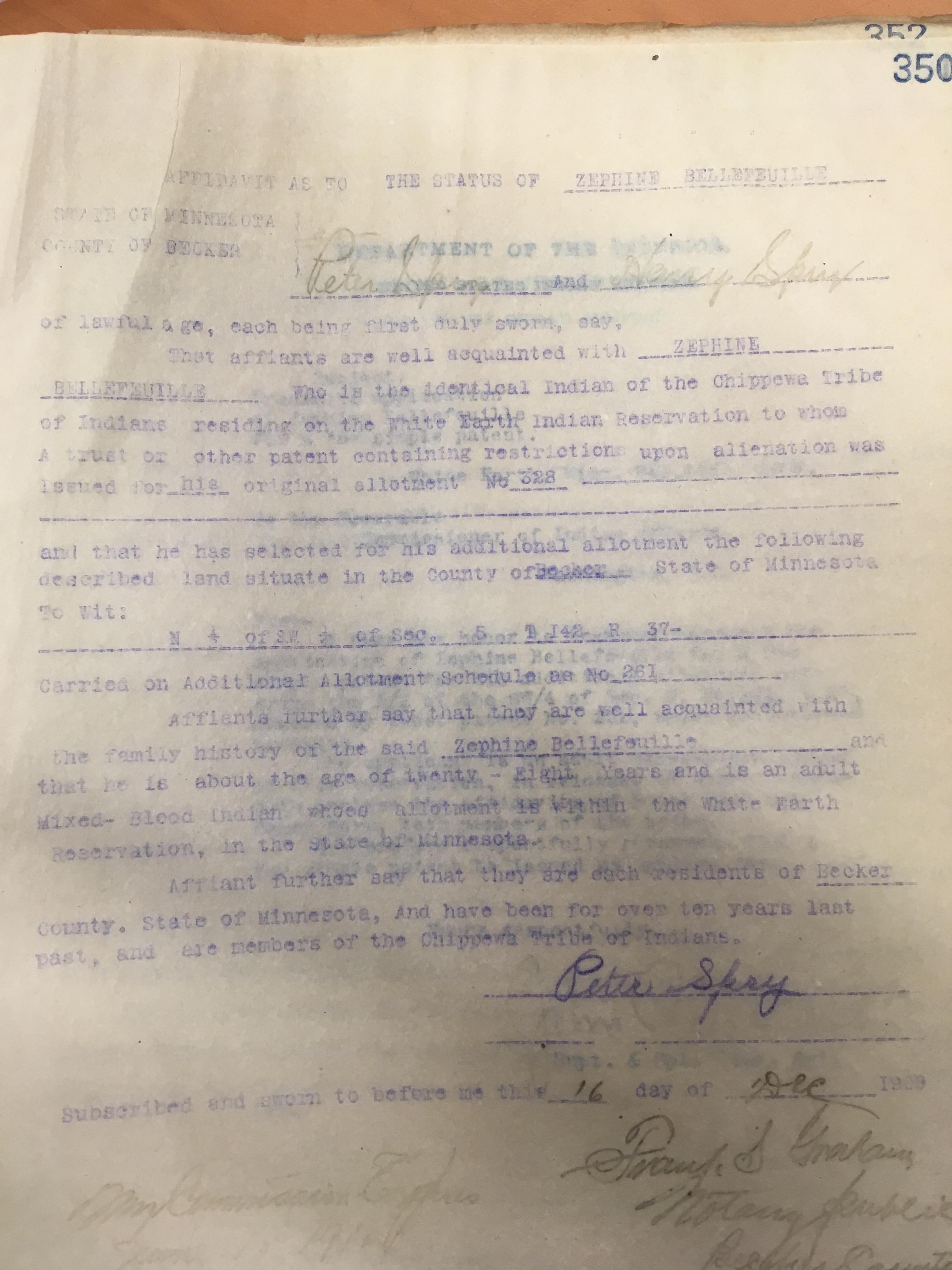
Among the records in the Archives I came across an affadavit signed by Peter (brother Henry was the second witness but his signature is absent) on behalf of “Zephine” Bellefeuille. Presumably this was Zephyr, his brother-in-law.This affadavit verified that Zephyr was a mixed-blood tribal member and was required to be submitted as part of an application for fee-simple patent for his additional allotment.  This was usually a preliminary step to selling the land. Based on the legal description, the additional allotment no. 261 received by Zephyr was located just west of Bad Medicine Lake. This was very likely pine land. Other Bellefeuilles and some Trotochauds also received additional allotments on the pine lands in the eastern part of the reservation.

IMG_0049Finally, I reviewed records associated with the land fraud claims and investigations made at White Earth in the early 1900s. I came across a record (case no. 145) wherein Lawrence Spry mortgaged his additional allotment in 1909 for $800 to the Homestead Real Estate Loan Co. It is not clear whether this was proven to be a case of fraud (Lawrence was 18 or 19 at the time).
My time at the National Archives gave me a glimpse into some details of our family history. The records confirm the Sprys did not benefit from the scandals related to the pine lands. Their focus seemed to be on farming. Nevertheless, they were witness to major changes on the reservation in the late 1800s and early 1900s.


White Earth: Settling In

When the Sprys arrived on the White Earth reservation in 1873-74, the area was not far removed from being a wilderness. There were no roads, other than a trail from Detroit (Lakes), where there was a railroad depot. There were about 500 or 600 people living on the reservation, many of them concentrated near the Indian agency at White Earth village. The village included a couple of stores, run by the McArthur and Fairbanks families. The federal government had built a gristmill and a sawmill at White Earth Lake. There was also a sawmill just off the reservation on the Buffalo River at the outlet of Buffalo Lake. A small village, Richwood, had sprung up there.

The homesteads the Sprys and Trotochauds started were located several miles south of White Earth (assuming they homesteaded where they received allotments years later). Although they may have gotten some of their supplies from Richwood, they likely conducted business in White Earth as well. The original treaty language required Indians to farm at least 10 acres to be eligible for 40; an individual Indian could claim up to 160 acres. As tribal members, Amelia, Angeline and the other Trotochauds were eligible to obtain land this way. An entry from May in 1877 of the day book of the Indian agent, Lewis Stowe, mentions issuing Pierre Trotochaud 10 bushels of wheat to plant. They may have gotten lumber to build their homes from the government-run sawmill at White Earth Lake.

About the same time our family arrived at White Earth, a Catholic priest named Ignatius Tomazin came to the reservation to start a church and school. Fr. Tomazin was likely known to our family, as he was a protégé of Fr. Pierz and also worked with Fr. Buh, who served churches and missions from Crow Wing down to Sauk Rapids. In January 1873 Fr. Tomazin planted a mission cross at the present site of Calvary Cemetery, two miles south of White Earth village. The following year, work was completed on a small church at the site. It is likely members of our family were parishioners there.

Fr. Tomazin served as the resident priest at White Earth until 1877, when he ran into trouble with the federal government. Almost since his arrival on the reservation, Fr. Tomazin protested what he saw as discrimination against Catholic Indians by the Episcopal-run Indian agency. The priest wrote letters to newspapers as far away as New York complaining about Episcopalians getting the best clothes and other supplies before the Catholics. Fr. Tomazin believed the Catholic church should have charge of the White Earth agency because there were more Catholics on the reservation than any other denomination. Another issue was funding for the Catholic school. Although the government had built the Episcopal church and the government school run by the Episcopalians, the agent refused to fund the building of a Catholic school. This was not just the policy at White Earth, but at other reservations as well.

The conflict came to a head in the summer of 1877, when Agent Stowe ordered Fr. Tomazin to leave the reservation. The agent claimed that Fr. Tomazin had broken the law when he transported the late Bagone-giizhig’s daughters off the reservation without permission. The priest brought the girls to St. Benedict Academy in St. Joseph to further their education. When federal officials arrived to force his removal, the priest began ringing the church bell, bringing his parishioners to see what the trouble was. The Sprys lived about 5 miles south of the church and may have heard the church bells. The parishioners maintained a vigil in and around the church and outside the priest’s house because of a rumor that the officials were going to burn the church down. Because the government was concerned that Fr. Tomazin would incite the Indians further, a small cavalry attachment was sent to White Earth from Fort Snelling. After another confrontation during which Fr. Tomazin refused to come out of the church for three hours, he was finally convinced to leave the reservation. It seems likely that the Sprys and Trotochauds were on hand to witness these events. As with most of the mixed-blood families, the Catholic faith was the center of their lives and they would have supported their priest and protected their church.

Fr. Tomazin’s exit paved the way for the Benedictines to come to White Earth. To replace the priest, the bishop requested the abbot of St. John’s Abbey provide a priest and nuns for the reservation. The abbot sent Fr. Aloysius Hermaneutz and two nuns, Sister Philomene Ketten and Sister Lioba Braun. They arrived at the White Earth mission in November 1878 to find the log priest’s house log church had been stripped of everything but two stoves. Within a week, they opened a school with an enrollment of twelve girls and three boys and had forty pupils within a week. The Benedictines would go on to build a new school and church in 1881 located less than a mile east of the original mission site.

Soon Indians that homesteaded along the Buffalo River, including our family, requested that Fr. Aloysius provide them with their own school. In 1882, Sr. Philomena began riding horseback to the Buffalo River day school, some eight miles each way from the mission. Because of the dangers of traveling in open country, the school was often closed during the winter months.

Later in the 1880s, Lizzie Spry, the oldest daughter, attended an industrial school in St. Joseph run by the Benedictine nuns. There she was taught sewing, cooking, gardening and other “household arts” as well as reading and writing. In 1896, at age 23 Henry, the second-oldest son, was sent to the Carlisle Indian School in Pennsylvania, apparently to learn a trade. Henry only attended a month there before returning home. School records indicate he “ran”.

Mitchell and Amelia had a total of eight children, according to family records: Frank, born in 1871, Henry (1873), Lizzie (1874), Amelia (1878), Peter (1882), Ellen (1885) Lawrence (1891) and Madeleine (1894). Strangely, the U.S. Census in 1900 lists another son, Albert, born in 1884. Albert also shows up in annual Indian censuses conducted between 1886 and 1901. I can find no other record for this person.

The Spry family prospered in their new home, raising their family and watching the area around them change from wilderness to farmland. The land Amelia and Mitchell had selected for their home straddled the Buffalo River. They could have selected 160 acres of prairie, ready for the plow, but they chose to claim the woods along the river. This suggests to me they wanted to remain connected to woodland, to moving water. This allowed them to continue to hunt, fish and trap as Amelia’s family always had.

As they watched the land around them change, the Spry family also witnessed the debacle that unfolded with the passage of the Nelson Act, which established the allotment process and the Clapp Rider, which allowed Indians to sell their land. I’ll write more about this history in my next post.Spry family home

Frank, Mitchell, Albert, Peter, Amelia, Henry, Elizabeth and Amelia Spry at their home, around 1892.

Into the Whiteshell, Part 2

OLYMPUS DIGITAL CAMERA

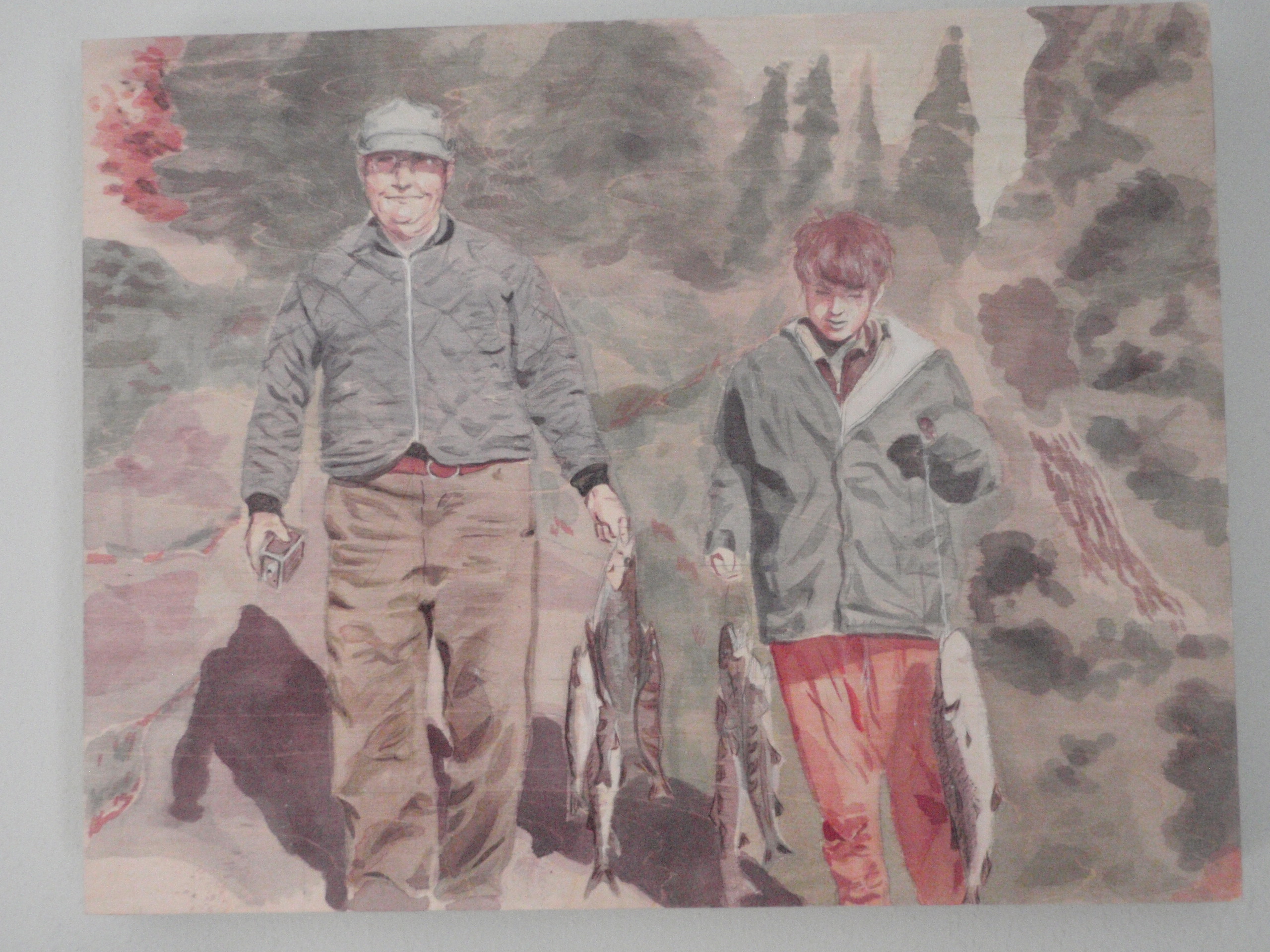
A painting by my daughter Hannah, based on a photo of Grandpa and me from a fishing trip in Canada.

Our trips to Whiteshell Provincial Park typically lasted seven or eight days, including travel time. Having five days in camp allowed us to explore the lake, trying out old fishing holes from Grandpa’s earlier trips and some new spots. Back in the 1950s and 60s Grandpa and his friends mainly fished for big northern pike, and occasionally got into some good walleye fishing. By the time I got to go, Echo Lake had developed an excellent walleye fishery.

My first year up, Dad brought along a 69-cent, hot pink lure with white feathers. Grandpa gave him some grief over it, but Dad tied in on anyway. For whatever reason, that lure was irresistible to walleyes.  By mid-day, the feathers were gone and by the end of the day the lure barely had any paint left on it! Grandpa tore through his tackle box, looking for anything with pink on it. Even though Dad had the hot hand that day, we all caught fish.

To keep under the possession limit at the time, we ate fish everyday. Sometimes Grandpa threw a frying pan, some lard and salt and pepper in the boat so we could a have a shore lunch, just like those fancy guided fishermen from the resorts. Grandpa did all the cooking on those trips and I did the dishes. The menu was never fancy but we ate like kings.

While we enjoyed catching walleyes, for real excitement we went after big pike.We checked out a spot on the lake Grandpa called Meat Market Falls. Located somewhere along the western shore of the lake, a creek tumbled down the rocks. It was a spawning stream for suckers, a favorite food of northerns in the spring.  Grandpa once caught a 28-lb. pike there years before. I remember admiring the big fish hanging on the wall in Grandpa and Grandma’s basement, its belly sagging below the edge of the mounting board. But we found the creek had been dammed up by beavers, so we landed the boat, hiked up the slope and inspected the dam.  It was the tallest beaver dam I had ever seen, over 10 ft at the centerline. Behind it was a pond of crystal-clear water where we tried a few casts but had no luck.

At the end of my first trip up, we stopped at a rock outcrop on the way back to the portage. Another sucker creek poured into the lake right next to the outcrop. It was a beautiful sunny day and we were in no hurry to leave. We cast spoons off the rock and hooked several nice northerns. Grandpa rigged up a frozen smelt on the end of his line and cast it out to sink about 6 ft below a big wooden bobber. When the bobber went down he told me to set the hook and start reeling. I fought the fish at least 20 minutes before Dad was able to get the landing net under it and haul it in. I had my first trophy northern pike, 42 inches long and about 18-20 lbs.

Grandpa was even more excited than I was and he and Dad decided right on the spot to have the fish mounted by a taxidermist for me. We carefully slit the belly on one side to clean it and packed it in ice. We brought the frozen fish to the taxidermist a few days after getting home. I remember the wait for the taxidermist to finish as excruciating – I couldn’t wait to see my trophy! Finally, after some months, we brought the mount home. Grandpa insisted my parents hang the thing in their living room where everyone to could see it. When I became an adult with a job and a house some years later my parents allowed me to take possession. The old mount has survived a half-dozen moves mostly intact, and hangs in our cabin to this day.

When we were not fishing or lolling around camp, we did some exploring. We hiked to nearby Forbes Lake, checked out islands for potential future campsites, and watched moose swimming across the lake. Grandpa always stopped to watch wildlife, whether beavers or bears or bald eagles.  Even though Grandpa lived to fish, he took the time to enjoy the beauty around him and enjoyed sharing the experience with me. Through him I gained a deep appreciation for the natural world and for quiet places. This is his greatest gift to me.


Into the Whiteshell, Part 1

Of all my experiences with Grandpa, our Canadian fishing trips had the most profound effect on me. Spending a week traveling to and camping in a wilderness in the Canadian Shield country, fishing for dinner, soaking in the beauty of the place, gave me a lifelong appreciation for the natural world. The Whiteshell country shaped who I am.

Whiteshell Provincial Park contains over a thousand square miles of rivers, forests, bare rock outcrops and crystal clear lakes and is located east of Winnipeg, Manitoba along the Ontario border. The area is essentially the western end of the Canadian Shield country that extends eastward through the Quetico-Superior country, the Boundary Waters and beyond. The exposed rock or shield is some of the oldest rock on the planet.

Whiteshell map.pngThe Whiteshell is named after the megis shell, a sacred object central to the origin stories of the Ojibwe. The area is known for its petroforms, which are rock alignments in the shapes of turtles, snakes, humans and other forms that historically may have been used by the Midewiwin or Grand Medicine Society of the Ojibwe, and probably are still in use today.

Our trips through the Whiteshell followed the Winnipeg River along the northern border of the park. This route was heavily used during the fur trade era, linking the Great Lakes to interior Canada.  The north half of the park is roadless wilderness, with only a handful of fly-in resorts and trail shelters for development. Our trip upriver was the most adventurous part of the journey. Dad, Grandpa and I traveled on Grandpa’s 14-foot Lund boat packed to the gunwales with gear, gas, food and beer some 40 miles. Grandpa’s boat was powered by an old 10-hp Johnson motor. He had a 3.5 hp Johnson motor that conveniently folded in half for storage, as a backup. That durable little motor is now in my garage.

Leaving Pointe du Bois, just above a large hydroelectric dam, at dawn we weaved our way among the many islands along the river to Lamprey Rapids. Here we had a choice of shooting the rapids or portaging around them.  If the water was high, the rapids were barely discernible and easy to traverse. In low water years, we typically unloaded a few critical items from the boat and then hand-towed it along the edge of the rapids to the upstream side.  We had good reason to use caution. Grandpa recalled a time when he and Grandma encountered another couple at the rapids who had been drinking. They later learned the couple drowned attempting to shoot the rapids.

Above Lamprey Rapids, we continued upriver, Dad reading an old map and pointing out the route to Grandpa. The dotted line on the map showed how to weave through the islands and outcrops. At the outlet of Eaglenest Lake, the river again shallowed and numerous rocks just below the surface had to be avoided. At the south end of the lake we reached Little Echo Creek and followed it back west. We traveled through a couple of smaller lakes to reach a falls and portage around mid-afternoon.

The portage, although only about 500 yards long, was the toughest part of the trip. We unloaded our boatload of gear and packed it over the rocky trail, making innumerable trips. On my first trip, at age 12, I thought we would never finish! I was stripped down to my long underwear, sweltering even though it was only late May.

The worst part was lugging the 14-ft aluminum boat up the portage. Dad grabbed the bow line and pulled it over his shoulder until the bow lifted up. Grandpa and I each took hold of the handle on each side of the stern. We would go about 20 steps, put the boat down and rest. We attempted to make the work lighter the next trip by inserting two aspen saplings through the seat braces to make like a wheelbarrow. Another year, Grandpa completed the wheelbarrow concept by welding up a wheel mounted to brackets which were in turn mounted to the boat. After thinking about this idea, working it up in his shop during the winter, and hauling it all the way upriver, Grandpa was convinced it would do the trick. But it didn’t, and the contraption probably still lays in the woods next to the trail where Grandpa discarded it.

Finally, after getting all our gear over the portage and reloading the boat, we were on the northeast arm of Echo Lake, our destination. The lake was incredibly beautiful, with many high cliffs, tranquil bays and incoming streams. Even though a wildfire several years before had burned off much of the timber, all the rocks and water, the sheer wildness of it – I was enthralled.

On my first trip, we camped on a rocky point near the south end of the lake. This was the site of an old trappers cabin that Grandpa and a group of friends leased back in the 1950s. Unfortunately, over the years more friends and friends of friends abused the privilege, leaving behind trash and letting the cabin fall into disrepair. Park rangers eventually burned it down. We set up an old army tent on the site, built a temporary table against a tree for washing dishes and preparing meals and gathered downed wood for the campfire.

I’ll write more about our experiences at Echo Lake in my next post.


Passing Judgment on Squirrels

As I had hoped, my office in the new house is a great place to watch birds visit our feeders. We have enjoyed watching the comings and goings of over a dozen species. Last week we had four different woodpeckers (red-bellied, pileated, hairy and downy) at our feeders at the same time! But with the birds come the squirrels. No doubt, squirrels can be entertaining, but do they have to eat so much? Are they making it harder for the birds get enough food?

We have both grey squirrels and red squirrels raiding our feeders.  The grey squirrels, which may be really hybridized fox squirrels, are at least twice the size of the red squirrels. But the size difference does not seem to bother the aggressive red squirrels. They attack whenever a grey squirrel comes near my feeders. They chase up and down, spiraling around tree trunks, making death-defying leaps. The action rivals the best chase scenes from Hollywood.

From what I can tell, the birding (or bird-feeding) community online spends a lot of time discussing ways to keep squirrels out of feeders. Bird feeder makers tout the latest innovations in “squirrel-proof” feeders. I found at least one site on-line that stated the squirrels can keep birds from feeding effectively. But the biggest complaint and reason for controlling squirrels appears to be just how much expensive birdseed squirrels consume.

Because most bird-feeding enthusiasts like all kinds of wildlife, their typical solution is to provide alternative feed for the squirrels away from the bird feeders. This can include corn cobs and peanuts. This strategy sounds good in theory, but does it really work? I would think squirrels habituated to bird feeders and the goodies contained therein are not going to go out of their way to feed on something else.

I find myself getting outsmarted no matter what I do to keep the squirrels away from my feeders.The expensive “squirrel-proof” feeder I bought includes a wire grid that surrounds the feeding tube. But the dimensions of the grid are just large enough to permit a red squirrel to squeeze through. Following on-line instructions I built a platform feeder 10 feet from the nearest tree and five feet above ground. I found out that squirrels, at least our well-fed brood, can leap vertically over five feet.

I bought a small live trap, thinking I could remove the squirrels humanely and relocate them to a nearby state forest, or at least somebody else’s woods. But the squirrels have ignored it so far. Something too small to trip the gate, probably mice, has raided the trap and stolen the bait a few times.  So much for being a nice guy.

Sometimes I can convince our dogs to go out and chase the squirrels away from the feeders, but the squirrels make fools of the dogs every time they begin the chase. Evidently, Mabel, our cockapoo, and Buddy, our springer spaniel, have not figured out that the squirrels are up a tree and out of sight before they take three steps out the door. Lately, the looks the dogs give me at the door suggest they are realizing the futility in giving chase.

My dad shows no mercy when it comes to squirrels at his feeders. Dad grew up in farm country where varmints like skunks and coyotes were routinely dispatched. To Dad, a squirrel raiding his feeders is a varmint. Dad has no compunction about treating his squirrel problem with “a little lead behind the ear”. Of course, he does this legally in accordance with Minnesota’s small game regulations. Dad is pretty proud of the sharpshooting skills he has developed defending his feeders over the years. But he admits the squirrels keep showing up year after year.

I tried using an old BB gun still around from when my kids were little. I was not trying to hit the squirrels, just scare them, which is just as well because the gun’s accuracy was questionable. But the BB gun quit working and now I am considering getting a pellet gun. With a Crosman Nitro Venom .177 Caliber complete with scope, I could act as judge, jury and executioner. But do I really want to shoot them? I have a firm belief in eating what you kill. When it comes to squirrels I’m not that hungry, especially with fresh venison in the freezer. I would feel guilty chucking a freshly killed squirrel into the brush.

My wife does not buy my lofty moral stance. She claims I really like engaging the squirrels in this contest of wits, even if I am losing. As she says, “if you got rid of the squirrels what would you do all winter?” As I write this, a huge grey squirrel is gorging himself at one of my feeders. Wait…did he just wink at me?


The Treaty of 1867: On to White Earth

As I wrote in my last post about my ancestors, Mitchell Spry (Michel Surprenant) married Amelia Trotterchaud in St. Cloud in 1871. According to the 1870 US Census, Mitchell was living with his sister Ellen, her husband H.S. Morton and their son. Both men were working as “laborers”. Meanwhile, Amelia Trotterchaud was living at home with her parents and working as a “domestic servant.” This last fact suggests the area was developing rapidly and some residents were doing well enough to employ domestic help.

Both Mitchell and Amelia and her family were residing in Langola Township, Benton County during the 1870 census. The current boundaries of the township include the north half of Little Rock Lake, where the Trotterchauds homesteaded, and lands north to present-day Royalton. There was once a town called Langola as well, which was located on the Platte River just south of present-day Rice. It featured several businesses and was a growing community until flooding on the Platte destroyed most of the town in the 1860s. Watab, another town that sprang up near the trading post south of Little Rock Lake, has also disappeared from the maps.

Mitchell and Amelia’s first child, Frank, was born at Little Rock on November 23, 1871. Henry, the second son, followed on February 17, 1873. Henry’s birthplace is listed as Stearns County, which is across the Mississippi River from Benton County. It is possible that the young family had moved there; if they did, they did not stay long. Their first daughter, Elizabeth, was born in Becker County on November 26, 1874. Based on this information, it appears the Sprys moved to the White Earth Reservation sometime in 1873 or 1874.

The White Earth Reservation was established by the Treaty of 1867, which was negotiated by the Bagone-giizhig (Hole in the Day the Younger) and other chiefs of the Mississippi and Pillager bands. The goal of the Federal government in negotiating the treaty was to get all Ojibwe not already settled on Leech Lake and other reservations to relocate to White Earth. Beginning in 1868 and continuing for the next 35 years, Ojibwe families emigrated to the new reservation.

The treaty’s terms included a provision to encourage farming. Each tribal member who farmed at least 10 acres could receive title to 40 acres and each could acquire up to 160 acres in this way. (This provision presaged the allotment system under the Dawes and Nelson Acts that eventually broke up the reservation and allowed white settlement in the 1890s.) It seems likely that Mitchell and Amelia saw this as an opportunity to make a new start to better support their family. Amelia’s parents Pierre and Angeline Trotterchaud and their family, which continued to grow, also moved to White Earth.

As evidenced by their applications for Half-Breed Scrip under the Treaty of 1854 with the Lake Superior Ojibwe, the Blairs and Trotterchauds were previously aware of opportunities for obtaining land. The scrip, which gave mixed-bloods the opportunity to obtain an allotment anywhere in the lands ceded under the treaty or any other public domain, was intended by the federal government to encourage them to become independent farmers. In 1863, the government determined that the scrip could be issued to mixed-bloods who did not live in tribal communities, which opened opportunities for speculators to get involved. Persons with any connection to the Lake Superior Ojibwe were sought out to apply for scrip and sell it to speculators. A St. Cloud attorney named Oscar Taylor assisted Machay (Margaret Blair) and her children, including her daughter Angeline Trotterchaud, to apply for the scrip in 1864. Whether the Blairs were recruited by Taylor and were intending to sell their scrip is not known. However, it seems more likely they were looking to obtain land, as white settlement around Little Rock was hemming them in and their status as mixed-bloods limited their economic opportunities.

The Half-Breed Scrip program came under investigation because of abuses by speculators, including lumber companies. Congressional hearings were held in 1871 to sort out legitimate claims. It is in this hearing record that we find Margaret Blair and her children listed as “mixed-blood of Lake Superior Chippewas.” According to the hearing record, because Margaret and Angeline were already married, they were not heads of household when the Treaty of 1854 was signed, and therefore, not eligible for scrip. Apparently this invalidated the claims of Margaret’s sons (Antoine, Edward and Alex) as well.

When the Treaty of 1867 was signed, it was not clear whether the Sprys, Trotterchauds and Blairs were eligible to move to White Earth. The treaty had been negotiated primarily by and for Mississippi Band members; our family was officially identified as members of the Lake Superior band. However, the family originated at Sandy Lake, which was the foremost community among Hole in the Day’s people, so it would be natural for them to identify with the Mississippi Band. Article Four of the 1867 treaty specified that only mixed-bloods who lived with their Ojibwe relatives on existing reservations were eligible. Hole in the Day insisted on this language being included because he did not want Clement Beaulieu and other mixed-blood traders at Crow Wing to benefit from the treaty. The Sprys and Trotterchauds did not live on a reservation at the time, although they historically had lived among Ojibwe people at Watab and throughout the area. Chief Hole in the Day was murdered in 1868, in a conspiracy connected to the Crow Wing traders. The death of Hole in the Day removed an obstacle for the traders to follow their clientele to White Earth.

Because the federal government was intent on relocating as many Ojibwe as possible, our family was likely encouraged to make the move regardless of their eligibility. Ironically, about the only family story from that time has it that “they were afraid of being attacked by Indians” on their way to White Earth. They may have been concerned about the Pillager Band, which still lived traditionally and roamed the country south of White Earth.

There is no record of where the family settled when they arrived, however, it seems likely the locations of the allotments they were eventually assigned are at or close to the locations where they initially settled. For Mitchell and Amelia, this was a hill above the Buffalo River, where later generations of Sprys grew up. Pierre and Angeline Trotterchaud’s allotment was about two miIes east, near the junction of County Highways 14 and 21. Both these locations were about 6 miles south of the White Earth Indian Agency. They were closer to the new village of Richwood, located just off the reservation. A sawmill was established at Richwood in 1871, powered by a dam construction on the Buffalo River.

In 1872, when the Indian Agency was established at White Earth, Agent Edward Smith reported about 500 people had arrived at White Earth. By 1875, there were about 800 people on the reservation.  In the following years many other mixed blood families made their way to the reservation, most settling near the Agency.

I’ll write more about life on the reservation in those early years in my next post.