“Ass Over Teakettle”

Grandpa was an avid duck hunter. He experienced duck hunting in its heyday, at least in this part of Minnesota. Back in the 1940s and 1950s Minnesota’s countless potholes supported millions of ducks, much to the delight of duck hunters. I remember looking at pictures of a garage floor full of ducks with Grandpa and Grandma posing behind them on one knee.

But as time went on government-sponsored “conservation” programs and the development of bigger and faster farm equipment resulted in the draining and plowing of thousands of wetland acres in northwest Minnesota and elsewhere. When I rode along with him when he was checking on his crop insurance customers Grandpa would look at the latest drainage and tiling projects and shake his head.

By the time I was old enough to hold a shotgun, duck hunting had become as much about finding a place to hunt as it was finding the ducks. Fortunately, Grandpa and Grandma’s neighbors and good friends the Gandruds had huntable wetlands on their farm. Gandrud’s Slough (actually a small lake) was a favorite spot for Grandpa to set up his duck blind. This was the place where I first experienced duck hunting.

Grandpa had his blind set up on the north side of Gandrud’s Slough with decoys arrayed in front of us on the water. Grandpa’s wooden duck boat was behind us in the reeds. We had the radio on, listening to the Twins play the Orioles for the American League pennant. I seem to remember not liking the Orioles much, probably because they’d beat us the year before, so that would make it 1970 when I was 9. It was a fairly warm and dry day, by duck hunting standards. My role was to sit quietly and watch for ducks. I was learning about patience.

Suddenly we heard some shots; Uncle Harold was in another blind a few hundred yards away. Out of nowhere, two ducks came zooming across our field of vision, about four feet off the water. Grandpa took a couple of passing shots and knocked them both out of the air. But one of the ducks was only wounded and was thrashing about a few yards out on the water. Grandpa loaded a 20-gauge, single-shot shotgun, handed it to me and told me to dispatch the wounded duck. I was excited, because I was no longer just along for the ride, but actually hunting! I pulled the gun up, took aim and squeezed the trigger. The next thing I knew I was lying in the duck boat with a bloody nose. Apparently, I had put the gun’s butt under my arm instead of on my shoulder and the recoil caught me square between the eyes.

Grandpa helped me up, laughing and saying something about going “ass over teakettle” while he checked me over. I don’t remember crying, but I probably did. As was his way, Grandpa continued to chuckle about this for the remainder of the hunt.

I wasn’t really embarrassed by this – after all, I was brave enough to squeeze the trigger. I remember rejoining the others in our hunting party back at Grandpa and Grandma’s for coffee. Grandpa let me tell the story. By then I thought it was funny, too. After swapping stories with the other hunters I felt like I belonged. I was a hunter.
Holy Matrimony at La Pointe

On September 28, 1843, at St. Joseph’s Mission in LaPointe on Madeleine Island in Lake Superior, Angeline Blair, the daughter of Margaret (Ma Chay) and Alexander Blair, married Pierre Trotochaud. St. Josephs was built by the famous missionary priest, Frederic Baraga. Originally from Austria, Fr. Baraga first came to the U.S. as a missionary to Ottawa Indians in Michigan in 1831. He established his mission at La Pointe in 1835. The church in which Angeline and Pierre were married was built in 1841.

As of 1843, La Pointe was well established as the center of the fur trade in the region as well as the headquarters for the American Fur Company. But the fur industry was declining rapidly as the beaver were being trapped out and European fashions were changing. In the 1830s, the Company began a commercial fishing business on the island. Fish were processed into barrels and salted down for preservation before being shipped to markets to the east. But this business line suffered growing pains and setbacks from national financial crises. In 1842, the Company suspended operations and a few years later went bankrupt.

La Pointe became an important government center about that same time. Treaties between Ojibwe bands and the US government 1837 and 1842 called for annuities to be paid to tribal members. The 1842 Treaty included the Lake Superior band members at Sandy Lake. The federal government began establishing agencies where the annuities could be distributed and other Indian issues could be addressed. One such agency was established at La Pointe. Here tribal members from the treaty bands would gather annually to receive their payments. Just as the few year-round residents of Madeleine Island did, the treaty band members lived the subsistence lifestyle while on the island, harvesting berries, wild rice, fish and game.

Also present at annuity time were the traders to whom they owed debts. Indian trappers and hunters were encouraged to buy traps and other supplies at the trading posts on credit before the trapping season started. As dwindling harvests, the introduction of whisky and unfair trading terms took their toll, Indians often fell hopelessly in debt. This resulted in the traders’ bills being payed as part of the treaties and the traders benefiting from the annuities more than the Indians did.

All of this information serves as background when considering the question of how and where Pierre and Angeline met. Was Pierre employed by the Company at La Pointe? Perhaps Alexander Blair was a fur company employee or an independent trader who had moved his family to La Pointe from Sandy Lake. Or, after Alexander died, Margaret moved her children there so they could find work. A check of the burial records for St. Joseph’s Mission (dating back to 1835) does not list any Blairs. I have yet to check the church’s baptismal records.

Margaret and her family may have remained at Sandy Lake, and only traveled to La Pointe for the annuity payment. As many as a couple thousand Indians would gather at La Pointe to await the payments. When there were delays in the arrival of the payments and other treaty goods, the bands would head out for the trapping and hunting season without their supplies. Because the band members had to be present to accept the payments and goods, the traders were not able to benefit.

A third possibility is that Pierre met Angeline while he was working at Sandy Lake or nearby Fond du Lac. Further research into fur company payroll records might verify where and when he worked in the fur trade. Under this scenario, they would have traveled together, perhaps at the time of an annuity payment, to La Pointe to be married in the church. This would suggest some devotion to the faith on their part, as many marriages between white men and Indian women in those days were informal and not officially recorded.

Pierre was about 28 years old and Angeline about 24 when they got married. Although it is possible theirs was originally a marriage of convenience to facilitate trade, they remained committed to each other the rest of their lives, until Pierre’s death in 1906. Their marriage endured personal tragedy, involved two homesteading efforts, and witnessed a tremendous amount of change in the Indian world as white settlement became an overwhelming tide.

A Giant Sandbox

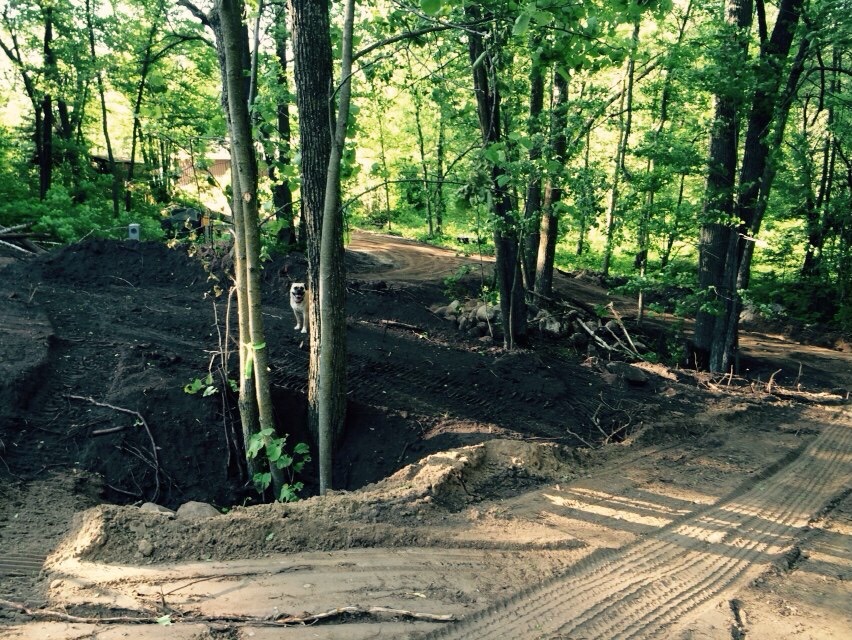
The excavators began work on our home site the week before last. I happened to be at the cabin working on some projects when they rolled in with a huge excavator on a flatbed trailer. Ron Gertz, the excavating contractor, introduced himself and immediately started asking about how the house would be laid out. He told me he needed to develop his own mental picture of what the final grade on the site should look like. We spent a lot of time putting stakes in, measuring and laying out the corners to guide the initial excavating.

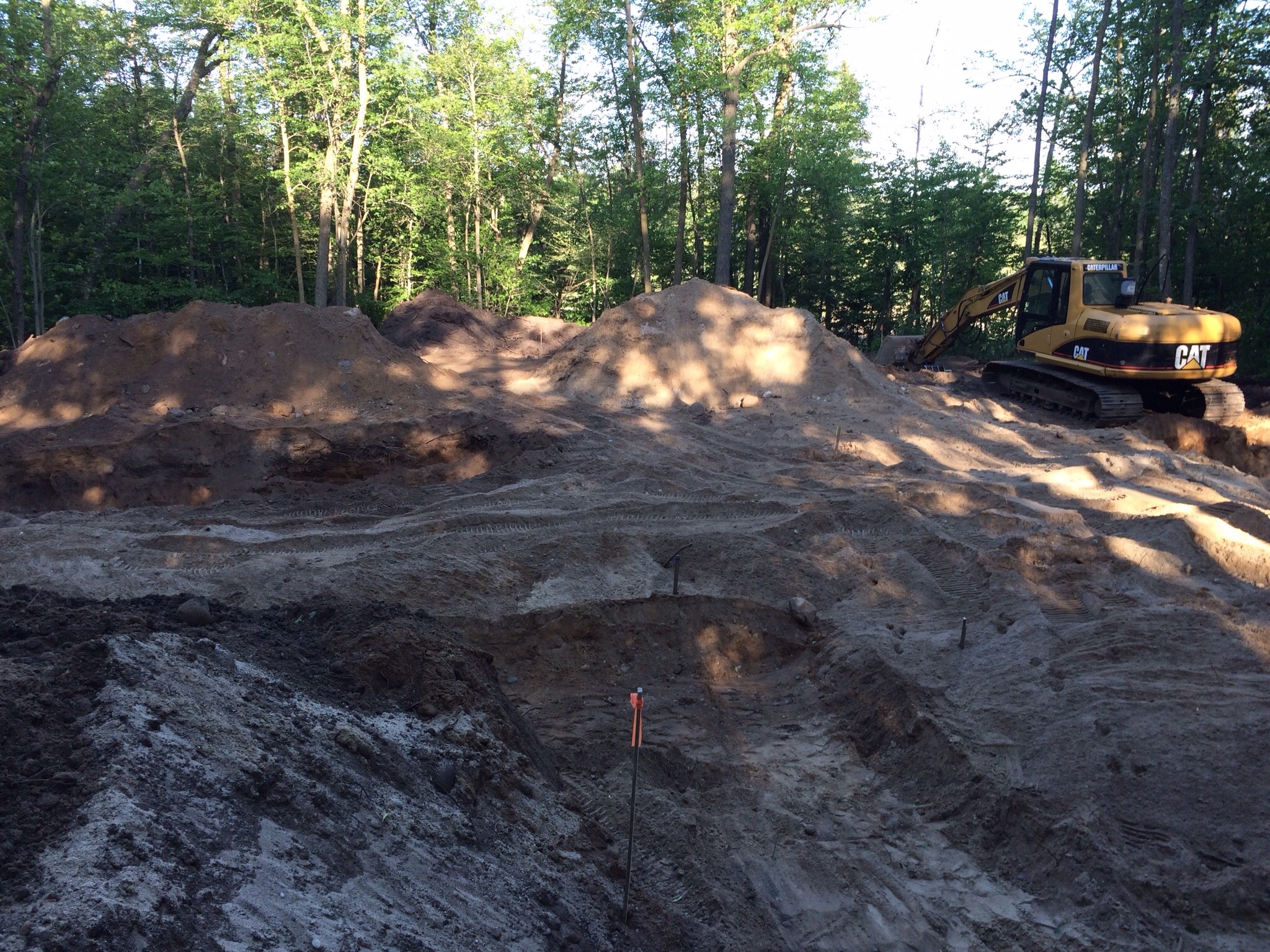
The big sandbox

 Ron was concerned that the approach I cleared did not provide the right angle for approaching and entering the garage. He quickly came up with the idea for a circular driveway that would provide the right alignment for the approach as well as improve traffic flow. He even jumped in his skidsteer and quickly brushed out the outline for the driveway. After spending some time with him on-site, it became clear to me that Ron had plenty of experience at this and was quite meticulous. He may come off as a humble farm boy, but he has an engineer’s eye.

The circular driveway in progress

 I went to the site a couple of days ago to check on progress. It was early evening and Ron’s crew had gone home. The circular driveway looked mostly complete, perhaps requiring another course or two of pit-run gravel. The crew had been working on digging the frost footings. Because of the slope, the excavation was over 12 ft deep on the southwest corner.

I found the exposed profile of the excavated hill fascinating; my training in soil science, which I hadn’t used in about 20 years, suddenly became relevant again. The ‘A’ and ‘B’ horizons (topsoil and subsoil) are almost 2 ft thick in places and look extraordinarily rich to someone who is used to working with the thinner soils of the western US. The underlying layer or “parent material” on which the topsoil developed, consists of sand and gravel and ranges from 3 to 6 ft thick. This layer contained a lot of rocks, from grapefruit-sized to over 2 ft in diameter. These were rounded smooth, which is typical of glaciated materials found throughout this area. The excavating crew is separating and stockpiling the rocks for our future use, as we requested. No need to buy expensive rocks for landscaping here!

Footings excavation. Note the whitish layer at the bottom in the background.

 But the really interesting feature of the excavation is the nearly white sand at the bottom. Ever since we bought this place 8 years ago, I have wondered how our little knob was created. The shoreline along the rest of the south side of 5th Crow Wing is relatively flat, but our hill rises up abruptly about 25 feet above the lake’s high water mark. It is generally round in shape at the base, with a curving crest shaped like a whale’s back. According to Wikipedia, this feature may be considered a “kame”, which is formed when material that has accumulated in a crevasse or hole in a glacier drops out the bottom as the glacier recedes. But a kame is usually made of unsorted material, which would not explain the clearly defined sand layer beneath the unsorted gravel.

spodic

Calcium deposits along root channels found in sand layer.

Perhaps the underlying geology of our home site was an ancient sand dune that was later covered by till deposits. This sand dune could have formed along the edge of a lake during an earlier glacial period. Similar sand dune formations can be found, for example on the north side of Height of Land Lake in Becker County. Unfortunately, there is no geologic map publicly available for Hubbard County that would shed any light on what the glaciers were up to in our immediate area. The geology is important to consider when siting our septic system and well. The layers of topsoil, gravel and sand should work well as a filter to keep our sewage from affecting our drinking water and the lake.

The sand itself is beautiful stuff – clean and bright. It is what is known as “sugar sand”, a highly desirable material for rebuilding beaches. I joked to Mel that maybe instead of building a house we should open a sand mine. She didn’t think that was funny.

Right now our home site looks like a giant sandbox. I suggested that Emily haul some of that beautiful sand to the other sandbox for the kids.

Miracle in Green


Winter here in northern Minnesota can be almost devoid of color, like the face of a dead man. The ground and the water are covered in a white pall. The hardwood trees, their nakedness showing in greys and blacks, stand shivering like mourners around a cold grave. Even the greens worn by the conifers are muted, dulled by the feeble light from an iron grey sky. The colors of winter here speak of death. How can this cold stillness be broken? How is it possible that life emerges again?

But emerge it does in springtime. We celebrate this even before the first green shows. As the snow and ice recede, we look for signs of life, reveling in the breaking of tiny buds in the trees. We walk on the earth, noting when the frost has given way and we can feel the earth’s soft warmth returning beneath our feet. Although we still only see greys and browns, we know we will see the colors of life again soon.

The signs are subtle. A faint hint of green appears in the trees and in the grass. We note the sun staying just a bit longer everyday. We begin to notice movement again in the air and on the land as great flocks arrow north and animals cautiously emerge on the road sides, blinking at the newly bright sun. The trees begin to model their spring apparel, each with a slightly different interpretation of the color green.

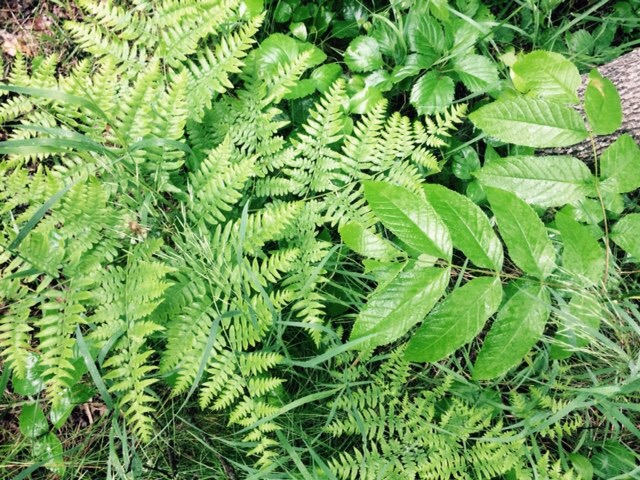
And before we know it, we are surrounded by lush foliage as the trees and shrubs, grasses and forbs, sedges and rushes, mosses and ferns all compete to occupy every square inch of space, to grab every bit of available sunlight. Where does all this energy come from? How can all this life emerge from winter’s deathscape?

Perhaps that is why we endure our winters, if only to witness year after year this miracle in green.

The Man from Maskinonge

On June 27, 1839, a man named Pierre Trotochaud entered the United States from Canada (according to a “Declaration of Intent” filed ten years later to become an American citizen). Pierre was born in Maskinonge, Quebec around 1815. Maskinonge, located between Montreal and Quebec City on the St. Lawrence River, was one of the communities where the fur trading companies recruited voyageurs, at least in the early days of the fur trade. Whether or not this practice still was occurring in Pierre’s day, furs were still being moved along the St. Lawrence and opportunities to work in the fur trade were still available to young men looking for adventure.

Unfortunately, the location where Pierre entered the U.S. is not known and could have been any number of places. However, having read up on the history of the Great Lakes region at that time, and having identified the places where Pierre later showed up in and around Minnesota, I think there are three main ways Pierre could have entered the country.

One was at Ft. Michilimackinac, which was an important port of entry for the fur trade at that time. Michilimackinac was located on an island in Lake Huron, at the mouth of the St. Marys River, which flowed out of Lake Superior. Trade goods moved through Michilimackinac, up the St. Marys to Sault Ste. Marie and on to Lake Superior. Trade goods and people were moved across Lake Superior largely by small boats called bateaux, which were wooden, approximately 40 ft long and rowed by a crew of 5 or more. Occasionally these boats were fitted with sails. Birch back canoes were also still in use, mainly for shorter trips along the coasts.

In those days, the American Fur Company dominated the fur trade in the Great Lakes region and had its headquarters at La Pointe on Madeleine Island off the southern shore of Lake Superior. The company had docks, warehouses and stores located in La Pointe. According to the journals of Henry Rowe Schoolcraft, approximately 800 people called Madeleine Island home in 1832. Schoolcraft estimated that only about 150 members of the population were Ojibwe. With the exception of a handful of “white” employees of the fur company, the remaining population were “half breeds”. These were the sons and daughters (and grandsons and granddaughters) of unions between mostly French Canadian men and Ojibwe women. Such marriages were encouraged by fur company officials and if not encouraged, at least tolerated by Ojibwe leaders to facilitate trade.

If Pierre did not come through Michilimackinac, it is possible he arrived in Minnesota by steamboat. In those days, the head of navigation on the Mississippi was St. Peter’s Landing, below Fort Snelling. He could have boarded a steamboat in Prairie du Chien, a fur trading center on the Wisconsin side of the river, or perhaps he boarded at St. Louis, also a major trading center. Many other French Canadians who entered the US at that time landed at St. Peters.

This brings us to the third theory of Pierre’s arrival. He may have relocated from the Red River Colony, traveling what would soon become one of the Oxcart Trails. French and Scottish Canadians were recruited to settle the colony, located near present-day Winnipeg, by Lord Selkirk and others, beginning in the early 1800s. Floods, grasshopper plagues, isolation and other problems made life in the Colony very difficult and led to many of the settlers returning to eastern Canada or emigrating into the US.

Whether Pierre arrived by land or by water at St Peters, he would have found a few makeshift dwellings around the fort and not much else. The inhabitants were mainly French Canadian and mixed blood hunters, trappers and traders. Around that time the US Army began its efforts to move all civilians off the post property. The Army was concerned about a possible Indian attack, did not completely trust the mixed bloods and did not want their dwellings to provide cover for attackers. In 1840, the Army finally removed the remaining squatters by force and burned their buildings. One of those forced out was “Pigs Eye” Parrant, who was just getting his tavern business started. The place downstream from the fort where he relocated was the beginnings of a village originally named Pigs Eye, which later became St. Paul.

Regardless of how Pierre came to what is now Minnesota, it seems clear that he was involved in the fur trade. Given he was about 24 years old, it is possible he began working when he was much younger, perhaps in a warehouse back in Canada. That may have led to a similar job at La Pointe. Alternatively, he may have met and gone to work for one of the major players in the fur trade, who were often conducting business in and around Fort Snelling. These would have included Henry Sibley, William Morrow Rice (who also arrived at St. Peters in 1839), and others.

His work in the fur trade led to meeting a mixed-blood woman from Sandy Lake named Angeline who would be his wife.

Better than Christmas

March and April seemed to last forever when I was a kid. Nothing to do but watch the snow melt and the mud dry. This was also the Lenten season, when I gave up cookies or chocolate for 40 days. Easter Sunday couldn’t come soon enough. My birthday during the first week of April was a bit of a reprieve, unless it fell during Lent, then no chocolate cake for me.

But the hardest part of waiting out March and April was anticipating the opening of fishing season the second Saturday in May. This was the most exciting day of the year for me, bigger than my birthday or Easter Sunday or maybe even Christmas. Fishing Opener meant spending the weekend with my grandparents at Island Lake.

Leading up to the big day, I would go through my tackle box, making sure I had enough hooks, sinkers, leaders and swivels. I carefully untangled the Daredevil spoons and sorted them by color and size. By late April, most of the snow had melted and formed small ponds in the fields surrounding our home. These made perfect locations for casting practice. Having had to slog through the muck a few times to retrieve a lure hung up on some stubble or a rock, I learned to take the treble hooks off and practice with a blank lure.

On the Friday before Opener, my grandparents would pick me up after school on their way to the lake. I don’t think I learned much in school on those Fridays; the anticipation was so hard to contain. Grandpa would have his 14′ Lund loaded in the back of the pickup, inverted with the bow above the cab, and the Hiawatha camper hitched up. I imagined how jealous my classmates were as they watched me climb in.

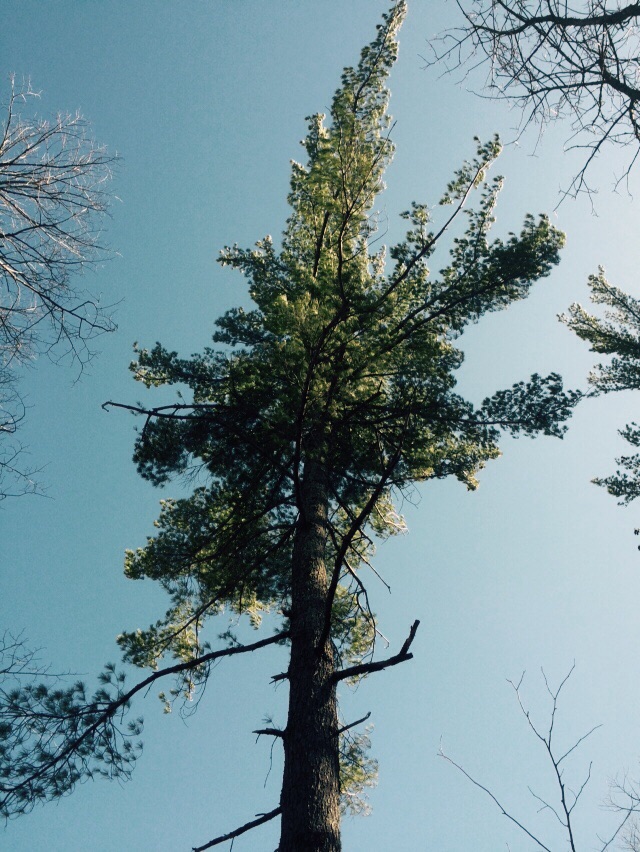
I always thought the drive to Island Lake, along Minnesota 34, was beautiful, no matter the weather. The scenery heading east from Detroit Lakes transitions from scattered oak stands in fields to dense hardwoods and then to a mix of hardwoods and pine in the hills further east. Having grown up surrounded by farmland, I’ve always been attracted to the beauty and mystery of the Minnesota northwoods. Spotting the first majestic white pine along the highway, somewhere around Toad Lake, was always a highlight for me.

The only part of the drive I didn’t like was the annual stop at Hanson’s Flyway on Height-of-Land Lake. Lawrence Hanson ran a small bar and gas station along the highway, and loved to tell stories to anyone who would listen. As I learned growing up, Grandpa loved to stop at small roadside joints for a beer or two and a story or three. So I would get a candy bar and bottle of pop and sit and wait, spinning on a bar stool until it was finally time to go.

Island Lake lies northeast of Height-of-Land in eastern Becker County. In addition to several islands, the lake features an assortment of points, bars and other structures, which make for excellent walleye habitat. The fishing was great, as well as I can remember, in my early years. Like with most lakes that receive a lot of fishing pressure, fishing at Island seemed to decline over time. But that didn’t discourage us from coming back every year.

After setting up the camper and unloading the boat, Grandpa and I would sit down and go through our tackle to plot our strategy. We’d check the rods and reels, changing line if necessary. Grandpa taught me how to tie knots, pick sinker weights and put together the best presentation to fool the wily walleye. For me, the anticipation continued to build. I couldn’t wait for Opening morning.

We usually headed out just after daybreak, with Grandpa at the helm, Grandma on the middle bench and me at the bow. We had our favorite spots: the Moosehead, the Sunken Island, Barrel Bay (“like catching fish in a barrel”), and others. Grandma would hand out the minnows, but she would not touch the leeches. We would fish until mid-morning, come in for lunch, and then head out again in the late afternoon and fish until dark.

I always liked fishing in the evening the best, enjoying the colors of sunset, the silhouettes of the pine trees along the shore and the calls of the loons. According one of Grandpa’s favorite stories, I didn’t always like the loons. One evening when I was probably 7 or 8, I said “I wish those loons would quit making all that noise.” Apparently, it was affecting my concentration!

Most years we were joined at Island Lake by Uncle Dewey and Aunt Elsie from Brooklyn Center. Uncle Dewey was Grandma’s only brother and a World War II vet who fought all the way across Europe. Being really into all things WWII, I was fascinated by him. Dewey wasn’t one to tell a lot of stories, but once in a while he would talk about his experiences and answer my questions. Aunt Elsie always brought really decadent treats to share and had an infectious laugh.

Uncle Dewey drove a fancy Buick Electra, the first car I ever saw with electric windows and air conditioning. He had a contraption mounted on top that would allow him to load and unload the boat by himself. Grandpa gave him a hard time about living in the lap of luxury. Grandpa would also grumble about Mitzi, the little poodle that went everywhere with Elsie.

When I was little, I thought I would always want to be with Granydpa and Grandma at Island Lake. But that changed when I got to high school. It so happened that the high school prom fell on the same weekend as the Opener. Although I didn’t have a girlfriend, I still asked a girl to prom, because that’s what everybody did. Grandpa and Grandma seemed to understand. Looking back now, I would rather have gone fishing.

A family at Sandy Lake

My family’s Ojibwe ancestry has been traced back to a woman named Margaret or Ma Chay, who was born around 1800 at Sandy Lake, which was a major Ojibwe village located in what is now northeast Minnesota in the 18th and early 19th century.   According to Anton Treuer’s book The Assassination of Hole in the Day, Hole in the Day the Elder was a prominent chief at Sandy Lake and his son Hole in the Day the Younger was born there.

Sandy Lake was also the site of important trading posts during the fur trade era.  In 1794 the Northwest Company established a post on the west shore of the lake that remained in operation until after the War of 1812.  A law passed in 1816 required all trading with Indians be conducted by American citizens, which forced the Northwest Company to sell its holdings in the U.S. to John Jacob Astor. Astor’s American Fur Company operated the old fort for several years before establishing a new fort on the Sandy River, which connects Sandy Lake to the Mississippi. Several other independent trading houses also may have existed in the area.

The trading posts are important to our family’s story because it is likely that Margaret met Alexander Blair at one these posts. According to government records, Blair is listed as the father of Margaret’s four children: Angeline (born 1819), Antoine (1827?), Edward (1829?) and Alex (1840?).  Given the time span between the oldest and youngest, it appears that Margaret and Alexander had a long-term relationship.

Unfortunately, I have found no solid information for Alexander beyond his name.  Having read as much as I can about the fur trade in the early 19th century, including employee lists of the trading companies, I have yet to find any mention of him. I have found other potential clues. There was an Alexander Blair who served in Canada in the British army during the War of 1812. Is it possible that our Alexander stayed behind after the war? There are also a couple of Alexander Blairs who show up in city directories for Detroit and other cities in Michigan and upstate New York in the 1840s and 1850s.  Was our Alexander one of many white men who, after making their fortune in the fur trade, abandoned their native families and returned to “civilization” to start another life? It is unlikely that I will find any connections between these men and our family, but I’ll keep looking.

Unfortunately, there is also little information about Margaret.  Her name shows up in the “Half-Breed Scrip” report, which investigated the use of scrip to issue land claims under the 1854 Treaty. The investigating commission had as one of their sources a trader named Peter Roy, who claimed to know Margaret. Roy stated that she and her three children who filed claims for scrip in 1864 were from Sandy Lake and were mixed blood Ojibwe of Lake Superior.  The commission ruled that Margaret was not eligible for scrip because Margaret was married before 1854, and therefore was not a head of household when the treaty was signed. Apparently, because Margaret was ineligible for scrip, the claims of her children were also rejected. Census records indicate that Margaret lived with one of her sons through at least 1870 and the sons and her daughter all settled together at Little Rock Lake north of present-day Sauk Rapids (the next part of the story will be in a future post).

My sense is that Alexander Blair died at Sandy Lake. I have no way of verifying this, of course. The burial grounds at Sandy Lake have long since been covered up by lake homes and condos.  Or was he buried along side a trail or portage somewhere? Did he drown? There are many possibilities, all of which suggest Alexander Blair was one of many men involved in the fur trade who are lost to history.

This is hard.

Ok, so I was going to write an “epic” historical novel about my French-Canadian and Ojibwe ancestors. I came up with an opening scene and wrote the first few paragraphs. I had a general idea where I wanted to go with it, but then I stopped. Maybe I was just scared, but the right side of my brain was telling me it was not practical for me to write a novel to share on this blog.

I know almost nothing about writing fiction, and my attempts to date have been painstaking. I need to give myself time to learn how to write fiction without the pressure of any deadline or specific goal. I need to start out on a smaller scale, join a writing group, do some workshops, etc. At least that is what I have read about other writers starting out. Mostly, I need to find out if I am any good at it.

But I have all this information about my ancestors that I really want to share. I decided I will share it in essay form. Hopefully, I can keep it interesting enough to keep you coming back for more. Bear with me.

“Grandpa wake up!”

Grandpa, wake up! That wheel is going R-R-R-R!”

My earliest memory of my grandpa took place in his fish (or ice) house when I was about 3 or 4 years old. Let me preface this story by saying I have a hard time imagining taking someone that young out to the fish house. Grandpa had to have immense patience to make this work. It helped that I adored him and always wanted to please him, but preschoolers aren’t known for their ability to sit still or pay attention. Looking back now, I see it as a measure of how much Grandpa wanted to share fishing, a sport he loved, with me.

The house sat on the ice of Big Floyd Lake, over his favorite fishing hole. It was painted Institution Green and had a tiny window up high next to the door, so he could see who was coming. If it was the game warden, he figured he had time to tidy up the place.

I remember looking at all the curious, ancient-looking features inside the house. There was a propane stove along the wall opposite the door. It was black, with an elongated top over a smaller base. The stove reminded me of the anvils Wiley Coyote was always trying to drop on the Roadrunner. I loved watching small ice chips sizzle when I put them on the top.

Above the stove hung a small metal cupboard with a white enamel finish. The enamel was chipped at the corners and the doors didn’t close right. The cupboard held a small tin pan, cups a jar of instant coffee and maybe some hot cocoa mix. Grandpa would dip water out of the lake and set the pan on the stove to boil. When the water was ready, he would make himself coffee and me hot cocoa. Sometimes, when there wasn’t any cocoa I would drink a little coffee. This may be why I learned to like coffee at an early age.

The house had four holes, one in each corner, for fishing. Grandpa made himself an power ice auger using an electric motor that had been used to raise and lower landing gear on an airplane. The thing saved him some grunt work with a hand auger, but it weighed a ton so it still took a lot of effort. It was fast, which was the main thing – Grandpa couldn’t wait to get the lines down and start fishing.

We usually fished with little wooden jig sticks, which held just enough monofilament line wound over two knobs above the handle. A small hook baited with wax worms, grubs or corn, a couple of sinkers and a cork or styrofoam bobber were all we needed to catch sunnies (sunfish or bluegills).

In one corner hole, Grandpa had another rig he used for catching bigger fish. He nailed an old open-face reel to the wall and equipped it with heavy black nylon line, a large hook and a long, pencil-shaped plastic bobber. Grandpa would bait this rig with a large minnow. He really wasn’t after a big fish (he preferred panfish) but he wanted to catch any “hammer handle” (small northern pike) that was hanging around, scaring off the sunnies. If it was big enough, it would go home with us and Grandma would pickle it. If not, it got tossed out the door.

The fish house also had a small bunk built along another wall and covered with tattered old couch cushions. This came in handy when Grandpa took his afternoon naps. On this particular day, he instructed me to watch the lines as he took his snooze. It seems a little crazy to me now to leave a preschooler in charge, but Grandpa always believed in learning by doing.

While he slept, I wandered around the little house, checking the bobbers, but also looking at the various poles, hooks, lures and other gear hanging on the walls. I also spent some time eyeing the bag of candy Grandpa brought, which he stowed in the cupboard next to the instant coffee. That bag usually held candy corn, french burnt peanuts or mints, which he would share with me. But not often enough, I thought.

While thinking about how I could get to that candy, the reel in the corner started spinning. I ran over to watch the pencil-shaped red and white bobber disappear beneath the ice. The line kept stripping off the reel, which produced a mechanical whirring sound.

I ran over to Grandpa, still asleep on the bunk. I hesitated to nudge or shake him; that seemed as scary as waking a bear. So I yelled instead. “Grandpa, wake up! That wheel is going R-R-R-R!”

Grandpa roused himself, sitting up, reaching for his glasses and asking, “What’s the matter?”

I pointed to the reel in the corner, which was now quiet, and repeated: “that was going round and round and going R-R-R-R!”

Grandpa stepped to the corner, noticed the bobber was gone, and began yanking up the line. He started to get excited, in a hoarse whisper saying, “ooh its a nice one!” Grandpa landed a sleek northern pike. This was no hammer handle for pickling; it was a real keeper. I’m sure it was the biggest fish I’d ever seen to that point in my life.

For the rest of his life, Grandpa loved to tell that story, repeating the “R-R-R-R” sound effect to friends and acquaintances. I didn’t get too embarrassed about it, even as a teenager. After all, it was his way of telling people his grandson knew how to catch fish.