He Painted It Silver

Grandpa was a creative guy in his own way. His creativity came out of his experience growing up on a farm during the Great Depression. He learned to make do with what he had on hand, to fix things whether he knew how or not and to make use of every scrap of useful material.

Grandpa’s choice of media was scrap metal. He did not make abstract sculptures, although sometimes the odds and ends I found around his shop approached art. He made practical things, usually inspired by an ad or story he saw about some new gadget. For example, he made his own wall-mounted can crusher when recycling aluminum cans caught on. When the Club was advertised as the answer to auto thefts, he built his own version.  His “Club” consisted of angle iron and iron pipe welded together in a configuration that could be padlocked. Although I do not remember exactly how it worked, I do recall that part of his device was permanently bolted to the dash of his pickup truck. The finishing touch: a couple coats of silver spray paint.

The silver spray paint was Grandpa’s signature. He used it to cover up scorch marks and welds and to give his contraptions a shiny, new appearance. I suppose he thought it approximated the look of chrome. But the silver paint did not hide the fact that the object was homemade. That was made clear by the cutting torch edges, rough grinder marks and odd holes or bends from whatever use the scrap had in a previous life.  Anyway, appearance was not that important to him; what mattered was the device worked.

Grandpa was all about solving problems. When he and Grandma began traveling to Texas in the winter, they had to pack as much stuff as they could in their 4-door sedan. Of course, when one fills the trunk for a long trip one hopes they do not have a flat tire. No one likes to unload their car on the side of the road to get at the spare. Grandpa came up with a workaround to this problem. He would take the spare “donut” tire out of its place in the trunk, fill that space with stuff, and then bolt the spare to the top of the trunk lid.  When he first tried this concept he had an older car and probably did not diminish its value much. But a few years later he bought a brand new car – and immediately mounted the spare on top of the trunk. My dad called it “Ray’s Lincoln Continental Kit.”

When I was in grad school in Bozeman, Montana, my grandparents came to visit and meet their first great-grandson. Grandpa and I tried our hand at trout fishing on the Gallatin River, even though we were not particularly fond of eating trout.  We talked about trying them smoked, but did not have a smoker. The next time they came out, Grandpa brought me his latest creation: a contraption that would convert our little Weber grill into a fish smoker.

The device consists of a cut-off 30-gallon steel barrel with a rod welded across the middle. On this rod is balanced a piece of grill cut and welded to fit in the barrel. Attached to the welded grill are two racks that support the second grill, which is the one that came with the Weber. To smoke fish, one lights a charcoal fire and dumps wood chips on it to create smoke. Grandpa said it took about 8 hours to completely smoke a batch of fish. I have hauled it around through 6 states over the last 30 years , but never got around to using it.

Not sure I ever will use it, but I will always keep it. After all, Grandpa made it for me.

Maybe I’ll paint it silver.


Who Was Mitchell Spry?

On January 11, 1871 in St. Cloud, Minnesota, Amelia Trotochaud, daughter of Pierre and Angeline Trotochaud of Benton County, was married to Mitchell Spry of Benton County by Father P.M. Stukenkemper. This according to official county records, which also indicated that Pierre and Angeline served as witnesses.  The History of Stearns County, Vol. I indicates that Fr. Stukenkemper was the priest who built the church of the Immaculate Conception in St. Cloud in 1868. That church stood near the location of the present Cathedral in St. Cloud.

So began the Spry family in Minnesota. Our family has long known that Mitchell Spry was born as Michel Surprenant in Canada, but changed his name when he came to the US. Other than this fact, our family knew very little about Mitchell. This has been my main motivation in researching our family history: where did the Sprys come from?

Fortunately, French Canadian genealogy is well documented through the records of Catholic parishes in Quebec, which go back to the 17th century.  The Surprenant name can be traced back to 1678, when Jacques Surprenant, who came to Canada as a French soldier, married Jeanne Denote, who came to Canada in 1665. Jeanne Denote was part of the filles du roi (Daughters of the King), young women, many orphaned, who were recruited and sponsored by King Louis XIV to help settle French Canada. The Surprenants settled in the Monteregie region of Quebec, located south of Montreal and north of Lake Champlain.

Michel Surprenant was born on December 9, 1840 to Joseph Surprenant and Marie Flavie Monet and baptized the same day at St-Edouard de Napierville church, a photo of which is shown below. Michel was the fifth of seven surviving children of Joseph and Flavie. Joseph passed away in 1847.

IMG_0265The US Census of 1850 finds the widowed Flavie and her children living in Mooers, New York, which is located just south of the Canadian border. Julien, the oldest at 22, is listed as a sawyer, and was likely supporting the family. The other siblings were Flavie (19), Peter (12), Mitchel (10), John (Baptiste) (8), and Selena (4). It is not clear why the family moved to New York, although this area had historically been where Canadian refugees from the Revolutionary War were resettled. They may have had family or friends there.

The next record I could find for Mitchell (Michel) was in the 1870 US Census in Benton County, Minnesota. I could find no other record for him in the US for the intervening 20 years, although I did find at least one other Michel Surprenant who was older. I was curious as to his whereabouts during these years and wondered whether he went back to Canada to avoid being drafted into the Civil War.

Meanwhile, I went through some information my mom had compiled about the Sprys and came across a letter from a man named Houde who claimed that Michel Surprenant had a son named Felix by a woman named Leocadie Brunelle. I checked Canadian genealogy records and came across the baptismal record for Felix, which was dated May 2, 1858. Michel and Leocadie were listed as his parents. He was baptized at a church called Ste.-Melanie d’Ailleboust in a village called Acton Vale located in the same region of Quebec where Michel Surprenant was born. Michel would have been 17 years old at the time and Leocadie age 30. Mr. Houde also has several other siblings to Felix listed in his family tree on ancestry.com.

A search of the 1861 Canadian census finds Michel Surprenant living in Acton Vale. Here he is listed in a household with the following:

Benonie Brunelle, farmer, age 61, male, married 1815

Marie D. Brunelle, age 56, female, married 1815

Benonie Brunelle, age 20, male, married 1860

Leocadie B. Surprenant, age 31, female

Felix Surprenant, age 2, male

Ser(aphine) F. Brunelle, age 19, female, married 1860

Flavie Surprenant, age 40, female

Delima Surprenant, age 7, female

Francois Brunelle, age 27, male, married 1850.

Church records indicate that Benonie and Marie were Leocadie’s parents and the younger Benonie and Francois were her brothers.

Interestingly, the census does not list Michel and Leocadie as married. Felix’s baptismal record also points to something unusual about this relationship. Most of the baptismal records, which typically were recorded in same format using the same terms for each, indicate the baby is the product of a “legitime mariage”. This means the church recognizes the parents’ marriage, most likely because they were married in the church.  In Felix’s case the record does not include the word “legitime”. This may mean Michel and Leocadie claimed to be married, but had no proof or were not married in the church. Felix apparently had an older sister, Delima. Because Michel would have been only 13 when she was born, it seems likely she is Felix’s half-sister from a previous relationship her mother had. The woman named Flavie Surprenant may have been Michel’s mother or sister, who shared that name. The woman is listed as age 40; Michel’s mother would have been 51; the sister would have been 30.

Recently I learned that I share DNA with two descendants of Felix Surprise, which confirms Mr. Houde’s claim that Michel Surprenant had a family in Canada. This leaves us with plenty of questions. Why did he leave them? Where was he between 1861 and 1870? Was the name change part of an effort to start over in the U.S., or was he hiding from something?

Felix appears to have spent the rest of his life in Wisconsin. He was married to Marie Barbeau in 1889 and together they had eleven children. In the 1900 US census records, which find Felix and his family in Taylor County, Wisconsin, he uses the name Surprenant. In the 1905 state census and in all subsequent records, he went by Felix Surprise. The last record for him is the 1940 US census, which lists him as a boarder along with two of his sons in Kenosha, Wisconsin. Mr. Houde’s family tree indicates he died in 1945.

It seems unlikely that Felix Surprise and Mitchell Spry met or corresponded as adults. Given that our family was not previously aware of Leocadie and Felix, it is unlikely that Mitchell Spry ever talked about them.

Until now, the Sprys did not know the story of where we came from. As far as I know, we have no stories about great-great grandpa Mitchell. Come to think of it, our family is not good at sharing the stories of our lives. Maybe Mitchell wanted it that way.

What Grandpa Said

Grandpa liked to talk. He was not one to blather on about himself; he did not talk to hear himself talk. But he enjoyed a good conversation, and you could be sure he would do his part to keep that conversation lively. Grandpa’s language was usually colorful and plenty salty but never vulgar. Listening to Grandpa talk was fun because of the things he said.

Grandpa Ray was a master of metaphors and aphorisms, even if he didn’t know what those were. His eighth-grade education did not provide him with much sophistication, but his hardscrabble farmboy upbringing gave him a unique perspective on life and living.

Just as he enjoyed good conversation, he loved eating, and talking about eating.  Coming in from a long day in the fields or woods Grandpa usually had built up a good appetite, often saying “I’m so hungry my stomach thinks my throat is cut.” After enjoying a big meal or an especially good piece of cake or pie, he would say “I wish I was bigger so I could eat more.”

Grandpa always had a colorful way of describing certain events, people or things.  An icy sidewalk was “slicker than snot on a doorknob.” Something moving very fast through or past an obstacle was “like s**t through a long-necked goose.” A guy who told tall tales or talked a lot about himself was “so full of s**t his eyes were turning brown.” Such a man may also qualify for the application of another of Grandpa’s sayings: “he don’t know his ass from a hole in the ground.” He did tend toward the scatological.  When he needed a beer it was because he was “drier than a fart in a windstorm.”

Another phrase he borrowed from Grandma. Whenever she talked about something she didn’t like or didn’t understand she would use the term “ferluvnermunny”.  For example, when talking about traveling to or in the Twin Cities she would say, “why, the traffic down there is just crazy. Cars coming at you from all directions. I wouldn’t live down there ferluvnermunny.” Translation: for love nor money. It kind sounds like she considers these equivalent, but I don’t think that’s what she means. Even today Grandma often evokes Grandpa: “I know Raymond always used to say…”

A lifelong Democrat, Grandpa was not above talking politics.  A favorite saying he borrowed from his dad, a farmer, went as follows: “Never trust a man in a suit. He may be a banker or a lawyer or a revenuer. But you can be damn sure he’s a Republican.” I never thought of Grandpa as a racist, but he would occasionally say things that made me wince. Southern Minnesota farm country in the 1920s and 30s was not a place you where you would learn about racial justice. Grandpa was a product of his time.

One of the funniest things I ever heard Grandpa say happened on a fishing trip in Canada. This story requires a little background, but I’ll write more about our Canadian adventures in a future post.  On my third trip there, when I was about 15, I was lucky enough to hook what was probably the biggest pike I’ve ever seen.  I fought it for about 20 minutes, trying to get it close to the boat so Dan, the guy sitting in the bow, could net it.  Finally, I got it within three feet of the gunwale and Dan reached out with the net. He got the fish just out of the water; I remember it barely folding up in the net. Then the big pike straightened out and the next thing we heard was a big SPLASH! The fish was gone. The double-hooked smelt rig I had on was mangled, the hooks almost straightened back into wire. The pike had torn a gaping hole in the net. (It turns out Grandpa packed an old, rotting landing net instead of a new one he’d bought for the trip.) I turned to Grandpa who was manning the motor and said, “I don’t know if I should laugh or cry.”

When we got back to our fish camp that afternoon, the story was told and retold to the guys in the other boat, who had gone a different direction that day.  As the beer flowed and the whisky bottle made its way around the campfire, the one that got away got bigger and bigger.  Apparently, it was the biggest fish Dan had ever seen too.  He couldn’t stop talking about it. Finally, Grandpa got tired of hearing him talk about it and said so. Then he said:

“Your mouth is flapping like a whippoorwill’s ass during chokecherry season.”

The little fish camp erupted with laughter. We were literally rolling on the ground with tears in our eyes. They could probably hear us in Winnipeg that night.

Grandpa was never a rich man, but he knew how fortunate he was. When he was relaxing in a boat or a lawn chair or driving through the countryside just enjoying the day, he would say “I wonder what the poor (or rich) people are doing today.” He wasn’t a snob, but he felt rich.

This is what I take away from my experiences with Grandpa Ray. Anyone who enjoys life as he did is rich indeed.

Grandfather Oak

You stand erect, unbent by the wind, challenging the clouds.

Burly limbs, dark and sinewy, like a wrestler’s arms, reach to possess the sun.


You do not put on airs like your neighbors the maple and the linden.

They are graceful, lyrical; you are stolid, silent.


They dress in gay colors, dancing through the fall, ignoring winter’s threat.

You fade to tans and grays, the colors of a workman’s clothes, and await the ice and snow.


You hold the power of the sun inside you, locked in against the cold.

You stand dark and silent against the snow-filled sky and wait to bring green again.


You stand as a silent witness, a keeper of stories.

You listened to the hunters and the berry pickers as they camped under your leaves.


You knew the noble pines who once ruled the land.

You survived the onslaught, but will not tell the tale.


You witnessed the dawn of machines. You watched the lights cross the sky.

You stand in this forgotten corner and will never feel the sting of the saw.


You do not stand against time. You are time.


The War on Shrubs

Shortly after Mel and I bought our 11.78 acres of brush and swamp nine years ago, I cut a loop trail through the woods.  Other than having to clear a few downed trees, all I had to do was cut some brush to clear a path.  This brush was actually shrubs and young trees vying for limited sunshine under the old basswoods that dominate our woods. At one point along the trail, I encountered some chest-high woody plants with nasty quarter-inch thorns.  I assumed these were hawthorn or some such thorny shrub, cut my way through them and moved on down the trail.

We used the trail in winter to cross-country ski and in spring to find emerging wildflowers. It only took about ten  minutes to make the loop on skis, but three such loops made for a decent morning workout.  I had to do a little maintenance every year, but I saw it as a good excuse to spend some time in the woods.

After we bought the defunct Emmaville Store six years ago, we found that getting time at the cabin was getting harder and harder to come by. Our little loop trail fell into disuse.

Last summer, after selling Emmaville as a going business, we came home to the cabin and a backlog of maintenance items. After working my way down the honey-do list, I finally made it back out to the woods.  Our trail had grown over again in many places. As I walked it and contemplated clearing it again, I came across a tall jungle of the same thorny bush I encountered eight years before. What was then a bathroom-sized patch was now an impenetrable tangle occupying nearly half an acre.  Some of the plants were approaching tree size. 

Upon further inspection, I found that this mystery shrub was growing so densely that other shrubs and tree saplings were being excluded.  Whatever this thing was, it wasn’t good for our woods. I suspected it was buckthorn, an invasive plant that is becoming widespread in Minnesota.  But this plant did not match the description for buckthorn. 

Eventually I identified the beast as prickly ash, a native species. I read that the plant is useful for herbal remedies (another name for it is “toothache tree”) and the larvae of some butterfly species favor it.  But, according to the Minnesota Wildflowers website, “the spreading, shallow root system will send up new suckers when not inhibited by competing vegetation, creating dense thickets of nearly impenetrable brush that tears at the hands, face and clothing.” Yep, that’s the one.

IMG_1069

We have every intention of letting nature take its course in our woods.  But we want to make sure we have healthy trees coming up to replace the mature and over-mature trees.  The prickly ash is out-competing more desirable species such as maples, oaks, alders and dogwoods.  Also, we would like to walk in our woods without getting bloodied. I decided the prickly ash needs to be controlled.  I found out the hard way that just cutting it does no good, but probably encourages its spread. Also, losing the old basswoods and other trees to blowdown is creating new openings for prickly ash to occupy.

Late last summer I sprayed a 2,4-D based herbicide on the plants around the perimeter of the thicket to see if that would slow down its spread.  I’ll find out this spring if that worked. Everything I have read on-line suggests the best control is to cut the stems and immediately spray the stump. I might try starting some aspen cuttings to fill in where the prickly ash was. I am hoping I can whittle away at this problem over time to keep it under control.  Oh well, I guess I will have to spend more time in the woods…..

“Ass Over Teakettle”

Grandpa was an avid duck hunter. He experienced duck hunting in its heyday, at least in this part of Minnesota. Back in the 1940s and 1950s Minnesota’s countless potholes supported millions of ducks, much to the delight of duck hunters. I remember looking at pictures of a garage floor full of ducks with Grandpa and Grandma posing behind them on one knee.

But as time went on government-sponsored “conservation” programs and the development of bigger and faster farm equipment resulted in the draining and plowing of thousands of wetland acres in northwest Minnesota and elsewhere. When I rode along with him when he was checking on his crop insurance customers Grandpa would look at the latest drainage and tiling projects and shake his head.

By the time I was old enough to hold a shotgun, duck hunting had become as much about finding a place to hunt as it was finding the ducks. Fortunately, Grandpa and Grandma’s neighbors and good friends the Gandruds had huntable wetlands on their farm. Gandrud’s Slough (actually a small lake) was a favorite spot for Grandpa to set up his duck blind. This was the place where I first experienced duck hunting.

Grandpa had his blind set up on the north side of Gandrud’s Slough with decoys arrayed in front of us on the water. Grandpa’s wooden duck boat was behind us in the reeds. We had the radio on, listening to the Twins play the Orioles for the American League pennant. I seem to remember not liking the Orioles much, probably because they’d beat us the year before, so that would make it 1970 when I was 9. It was a fairly warm and dry day, by duck hunting standards. My role was to sit quietly and watch for ducks. I was learning about patience.

Suddenly we heard some shots; Uncle Harold was in another blind a few hundred yards away. Out of nowhere, two ducks came zooming across our field of vision, about four feet off the water. Grandpa took a couple of passing shots and knocked them both out of the air. But one of the ducks was only wounded and was thrashing about a few yards out on the water. Grandpa loaded a 20-gauge, single-shot shotgun, handed it to me and told me to dispatch the wounded duck. I was excited, because I was no longer just along for the ride, but actually hunting! I pulled the gun up, took aim and squeezed the trigger. The next thing I knew I was lying in the duck boat with a bloody nose. Apparently, I had put the gun’s butt under my arm instead of on my shoulder and the recoil caught me square between the eyes.

Grandpa helped me up, laughing and saying something about going “ass over teakettle” while he checked me over. I don’t remember crying, but I probably did. As was his way, Grandpa continued to chuckle about this for the remainder of the hunt.

I wasn’t really embarrassed by this – after all, I was brave enough to squeeze the trigger. I remember rejoining the others in our hunting party back at Grandpa and Grandma’s for coffee. Grandpa let me tell the story. By then I thought it was funny, too. After swapping stories with the other hunters I felt like I belonged. I was a hunter.

Miracle in Green


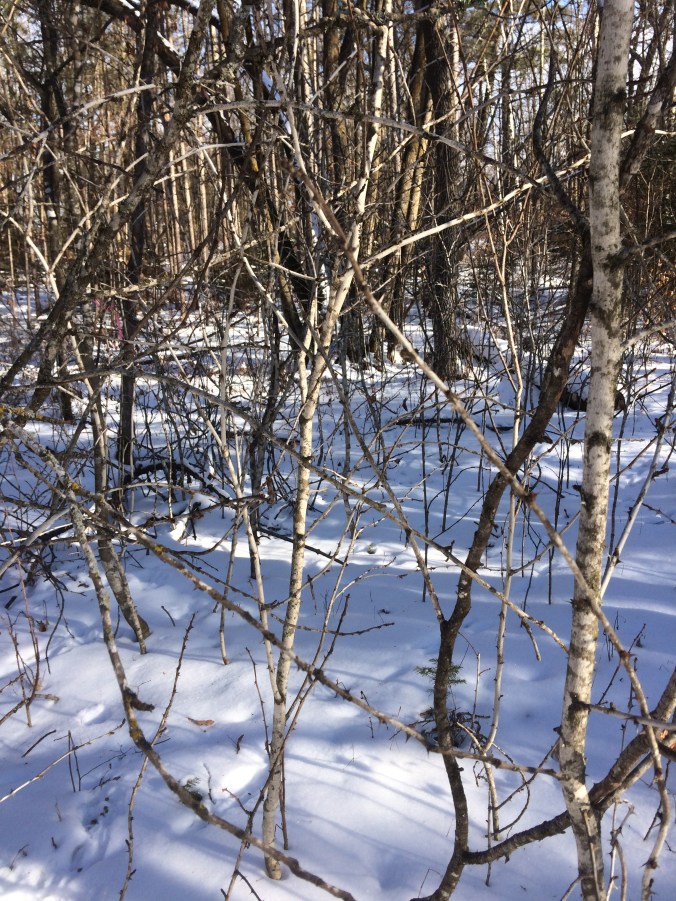
Winter here in northern Minnesota can be almost devoid of color, like the face of a dead man. The ground and the water are covered in a white pall. The hardwood trees, their nakedness showing in greys and blacks, stand shivering like mourners around a cold grave. Even the greens worn by the conifers are muted, dulled by the feeble light from an iron grey sky. The colors of winter here speak of death. How can this cold stillness be broken? How is it possible that life emerges again?

But emerge it does in springtime. We celebrate this even before the first green shows. As the snow and ice recede, we look for signs of life, reveling in the breaking of tiny buds in the trees. We walk on the earth, noting when the frost has given way and we can feel the earth’s soft warmth returning beneath our feet. Although we still only see greys and browns, we know we will see the colors of life again soon.

The signs are subtle. A faint hint of green appears in the trees and in the grass. We note the sun staying just a bit longer everyday. We begin to notice movement again in the air and on the land as great flocks arrow north and animals cautiously emerge on the road sides, blinking at the newly bright sun. The trees begin to model their spring apparel, each with a slightly different interpretation of the color green.

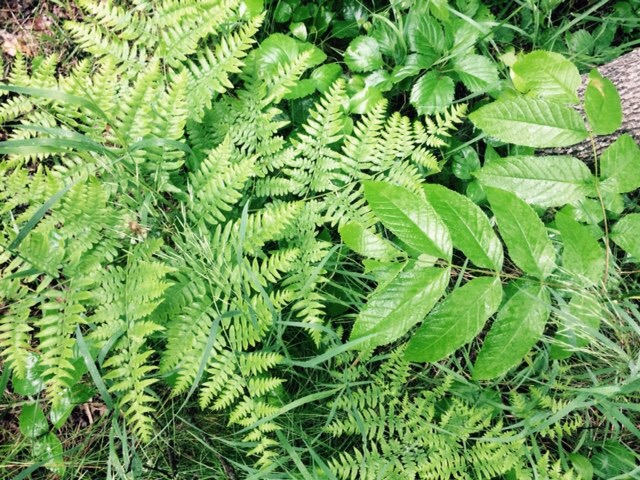
And before we know it, we are surrounded by lush foliage as the trees and shrubs, grasses and forbs, sedges and rushes, mosses and ferns all compete to occupy every square inch of space, to grab every bit of available sunlight. Where does all this energy come from? How can all this life emerge from winter’s deathscape?

Perhaps that is why we endure our winters, if only to witness year after year this miracle in green.